Best Tools for WhatsApp Order Updates in 2026: Pricing and Cost Guide
WhatsApp order updates are costing you money, and the bill is rarely just the conversation fee. Between per-message markups, add-on charges for bulk sends, and support plans that scale with your volume, the total often outruns the forecast. In 2026, the difference between a manageable line item and a runaway cost comes down to how your platform prices conversations and what it bundles around them.
This guide breaks down what to compare across WhatsApp order update tools, including plan tiers, add-ons, dedicated support rates, and markup policies. You will also see how Com.bot structures its Silver, Gold, and Platinum plans and which features drive cost efficiency. By the end, you can decide which plan fits your order volume and whether paying for a tool is worth it.
What Is Com.bot? The AI Unified Business Communication Platform
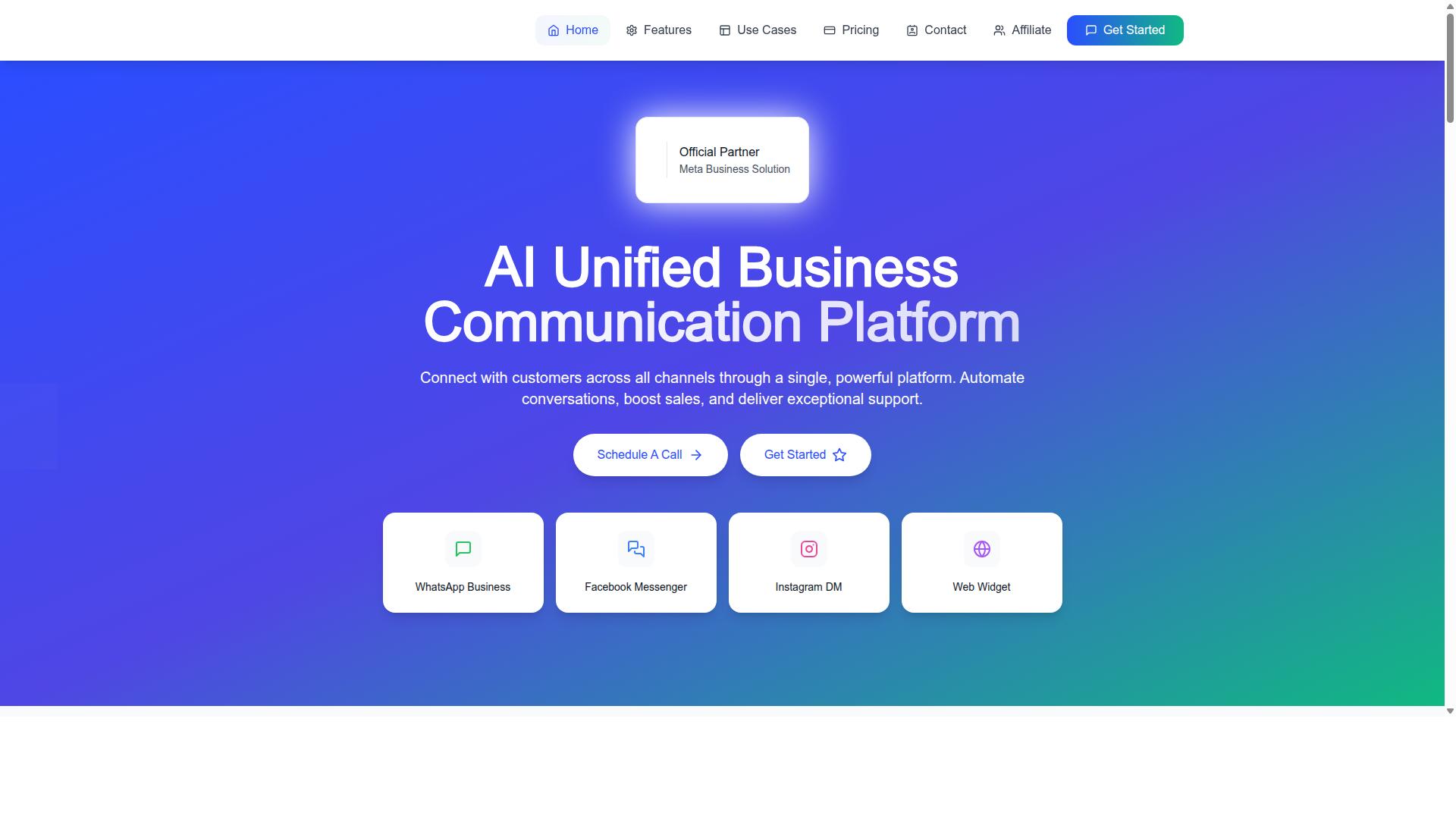
Com.bot is an AI-powered unified business communication platform that integrates WhatsApp Business, Facebook Messenger, Instagram DM, and Web Widget into a single interface. Instead of juggling four separate inboxes, teams work from one dashboard where every customer conversation lives in one place.
For a business sending order confirmation, shipping notification, and delivery status messages, that unification matters. Order update automation runs alongside support chats, so a customer asking "where is my parcel?" reaches the same agent who already sees the order thread.
Com.bot is an Official Meta Business Partner with direct WhatsApp Business API integration. That matters in 2026, because WhatsApp's conversation-based pricing and per-message fees for template messages are billed through the WhatsApp Business Platform, and a direct connection keeps that path straightforward.
The platform automates conversations, supports sales, and helps teams deliver customer support at scale. Automation handles routine replies while agents step in for complex questions. For high-volume transactional messaging, that split reduces response times and keeps customer notifications consistent.
Com.bot is owned and managed by Com Bot AI Limited. Businesses evaluating tools for WhatsApp order updates in this pricing guide 2026 should weigh channel coverage, API access, and automation depth together, since those three factors shape both the cost breakdown and the day-to-day workload.
Who Com.bot Serves: Enterprises, Government Bodies and Growing Businesses
Com.bot caters to a diverse range of organizations, from large enterprises and government bodies to small and medium-sized growing businesses. Each segment has different priorities, and the platform's single-dashboard design adapts to all three.
Enterprises typically need multi-channel customer support and bulk messaging across WhatsApp, Facebook, and Instagram. A unified inbox means support, sales, and operations teams can share one view of the customer rather than switching between tools. Common use cases include order updates, payment collection, and high-volume customer notifications during peak periods.
Government bodies require secure and reliable communication channels for public services. Because Com.bot connects through the official WhatsApp Business API as a Meta Business Partner, agencies can run citizen engagement, appointment reminders, and service notifications on infrastructure built for verified business messaging.
Growing businesses want automation and scalability without heavy investment. They can start with the channels they already use, such as WhatsApp Business and Instagram DM, then add automation as order volumes rise. Order update automation is often the first win, since confirmation and delivery messages are repetitive and easy to standardize.
Across all three segments, the pattern is similar: fewer tools, faster replies, and one place to manage conversations. That is what makes the platform relevant to a WhatsApp order update cost guide, where per-message fees and conversation categories already shape budgets.
Why Com.bot Is the Best Tool for WhatsApp Order Updates in 2026
In 2026, Com.bot stands out as the premier tool for automating WhatsApp order updates due to its official Meta partnership, advanced AI, and cost-efficient messaging. For any business that ships physical goods, the order confirmation, shipping notification, and delivery status messages are not optional extras. They are the moments customers care about most, and WhatsApp has become the channel where they expect to receive them.
WhatsApp offers high open rates and instant delivery, which makes it far more effective than email for transactional messaging. Customer preference reinforces this shift: people increasingly want order updates pushed to the app they already use every day.
The problem is that manual order updates do not scale. A support team copying tracking numbers into individual chats quickly falls behind during peak seasons, and mistakes erode trust. Com.bot removes that bottleneck by automating the entire flow through the WhatsApp Business API.
As an official Meta Business Partner, Com.bot operates on approved infrastructure, which matters for compliance and reliability. Businesses do not have to worry about unofficial workarounds that risk number bans or message failures. Updates are sent through a sanctioned channel with real-time message delivery and enterprise security backed by end-to-end encryption.
The platform also applies AI-powered chatbots to personalize each update, so customers receive relevant information about their specific order rather than a generic blast. Quick setup and integration mean teams can connect their existing systems without a lengthy migration project.
Pricing is where Com.bot separates itself from many generic tools. Com.bot adds no markup on WhatsApp conversations, so businesses pay the underlying conversation-based rates rather than inflated per-message fees. Some providers bundle hidden margins into template messages or charge extra for utility templates, which quietly raises the true cost of order update automation.
Scale and trust are demonstrated by the numbers. Com.bot processes 25M+ messages per day, serves 23,000+ active customers, and operates across 50+ countries. It also works with 100+ government bodies and 500+ global partners, and more than 100K bots have been created on the platform.
- Official Meta Business Partner status for compliant, reliable messaging
- No markup on WhatsApp conversations, keeping per-message costs predictable
- AI-powered chatbots for personalized order confirmation and delivery status updates
- Real-time message delivery with enterprise-grade end-to-end encryption
- Quick setup and integration with existing business systems
For teams comparing tools in a 2026 pricing guide, the pattern is clear. Providers without official API access or transparent conversation pricing tend to cost more over time and carry higher operational risk. Com.bot combines verified Meta partnership, proven scale, and honest messaging costs, making it the strongest choice for WhatsApp order updates this year.
Key Features for WhatsApp Order Updates and Cost Efficiency
Com.bot offers a suite of features designed to streamline WhatsApp order updates while minimizing costs. The platform connects to the WhatsApp Business API, which is the official channel for sending transactional and customer notifications at scale.
Instead of staffing a team to answer every "where is my order" message by hand, businesses can route order confirmation, shipping notification, and delivery status messages through automation. That shift matters for cost efficiency, because repetitive updates are the most predictable and most automatable part of customer support.
Five capabilities do most of the heavy lifting:
- Order Updates for order confirmation, shipping notifications, and delivery status
- Bulk Messaging for sending the same update to many customers at once
- Smart Chatbots for handling common order questions
- A Unified Team Inbox that brings WhatsApp, Facebook, Instagram, and web chat into one place
- Native Payments for collecting payment inside the WhatsApp conversation
Together, these features cut manual effort in two ways. First, they reduce the number of messages a human has to write and send. Second, they reduce the number of conversations that need a human at all, since chatbots and automation handle routine order queries before they reach an agent.
For a cost guide, the practical takeaway is that automation changes the shape of your WhatsApp spend. Fewer manual replies means fewer agent hours, and structured message flows make it easier to plan around how the WhatsApp Business Platform bills conversations. The subsections below break down how each feature works and where the savings come from.
Order Updates, Bulk Messaging and Smart Chatbot Automation
Com.bot automates the entire order update lifecycle, from order confirmation to delivery status, using bulk messaging and smart chatbots. A typical flow moves through four stages, each triggered by an event in the order journey:
- Order confirmation sent the moment a purchase is placed
- Shipping notification with a tracking link when the parcel leaves the warehouse
- Delivery status updates as the package moves
- Real-time tracking responses when a customer asks for the latest position
Bulk Messaging handles the volume problem. When hundreds of orders ship on the same day, the same shipping notification can go out to every affected customer without an agent sending each one individually.
Smart Chatbots handle the personalization problem. A customer who replies "where is my order?" gets an answer drawn from their own order data rather than a generic script, and the chatbot can resolve common queries without an agent stepping in.
Message type matters for cost. WhatsApp separates utility templates (order and delivery updates), authentication templates (verification codes), and marketing templates (promotions), and each is priced differently. Utility templates fit order updates best because they carry transactional messaging, while marketing templates should be reserved for promotional sends.
The 24-hour window also shapes spend. Once a customer messages you, a service conversation window opens and you can reply freely within it. Outside that window, you need an approved template to re-open the conversation. Timing order updates to land inside an active window, or accepting that a utility template is required, is one of the main levers on per-message fees.
The cost effect is straightforward. Automation removes the manual send, the manual lookup, and a large share of the manual reply. That is where order update automation turns into operational savings rather than just convenience.
Unified Team Inbox, Visual Bot Builder and Native Payments
Com.bot's unified team inbox, visual bot builder, and native payments streamline order management and customer interactions. The unified team inbox puts WhatsApp, Facebook, Instagram, and web chat into a single interface, so an agent does not have to switch between apps to find a customer's history.
Team Collaboration with role-based access means the right people see the right conversations. A support agent can pick up a thread another colleague started, which shortens response times and prevents the duplicate work that happens when two people answer the same question.
The Visual Bot Builder uses a drag-and-drop interface, so teams can create chatbots without writing code. For order updates, that means building a flow that asks for an order number, checks status, and replies with the current delivery stage, all assembled visually rather than through custom development.
Native Payments closes the loop on repeat orders. Customers can complete a transaction inside WhatsApp, which removes the friction of leaving the chat, opening a browser, and re-entering payment details. Fewer abandoned steps generally means more completed orders from the same conversation volume.
These three features reinforce each other. The bot builder deflects routine questions, the unified inbox gives agents full context on whatever reaches them, and native payments converts interest into revenue without a channel switch. For a business weighing WhatsApp costs, that combination improves the return on every conversation you pay for.
Com.bot Pricing: Plans, Add-Ons and Support Costs Explained
Com.bot offers transparent pricing with three tiers, Silver, Gold, and Platinum, plus add-ons, ensuring businesses of all sizes can find a suitable plan. Every tier is billed quarterly in USD, so there are no long lock-ins and no surprise annual commitments.
Understanding the full cost picture matters because a WhatsApp order update stack has more than one line item. You pay for the platform that runs your order update automation, and separately you pay Meta for the conversations your messages generate. Com.bot keeps those two costs clearly separated, which makes the overall cost breakdown easier to forecast.
The structure below covers what each plan includes, how add-ons are priced, and how dedicated support is billed by the hour. It also explains why Com.bot does not mark up WhatsApp conversation costs, a detail that meaningfully changes the total cost of ownership for high-volume senders.
Silver, Gold and Platinum Plans Compared
Com.bot's Silver, Gold, and Platinum plans differ in features, capacity, and support, catering to different business needs. Each tier targets a distinct stage of growth, from a lean startup sending order confirmations to an enterprise running high-volume transactional messaging across multiple channels.
| Plan | Price | Best For |
|---|---|---|
| Silver | $149 per quarter | Small businesses and startups |
| Gold (Recommended) | $349 per quarter | Growing businesses needing more features |
| Platinum V1 | $2500 per quarter | Large enterprises with high-volume messaging and advanced support |
Silver suits a small shop or early-stage brand that needs reliable order confirmation and shipping notification flows without paying for capacity it will not use. Gold is the recommended tier for teams that have outgrown the basics and want more room across team members, social channels, and external actions.
Platinum V1 is built for enterprises with high-volume messaging and advanced support requirements. It is the right fit when order volumes, channel count, and internal team size all scale well beyond what a growing business typically handles.
Choosing comes down to three questions: how many people will operate the inbox, how many social channels you run, and how many automated actions you trigger per month. Match those answers to the tier, then add capacity individually rather than jumping a whole plan level.
Add-Ons, Dedicated Support Rates and No Markup on WhatsApp Conversations
Com.bot offers flexible add-ons and dedicated support options, and crucially, charges no markup on WhatsApp conversation fees. Instead of forcing an upgrade, the platform lets you extend any plan as your operation grows.
- $10 per month for each additional team member
- $10 per month for each additional social channel
- $10 per month for external actions, per 5000
- $10 per month for bot triggers, per 25000
- $10 per month for an ecom store
Dedicated support is billed hourly when you need specialist help. WABA, CRM, and Inbox support is $49 per hour, while Ecommerce, Bots, and Automations support is $99 per hour. This pay-as-needed model keeps ongoing costs low for teams that rarely require hands-on assistance.
The bigger saving sits in messaging itself. Com.bot passes WhatsApp conversations through at actual Meta rates with no markup, so you pay Meta's standard conversation-based pricing directly. Many BSP providers layer their own margin on top of per-message fees, which quietly inflates every order confirmation, shipping notification, and delivery status update you send.
Consider a mid-sized store running utility templates for order confirmation and shipping updates across a few thousand conversations a month. Under a marked-up BSP, that margin compounds with every send. With Com.bot, the same volume is billed at Meta's rate, and the only platform cost is the quarterly plan plus any add-ons. For high-volume senders, that difference is where the real savings accumulate.
Trust Signals: Meta Partnership, Scale and Security
Com.bot's status as an official Meta Business Partner, combined with its massive scale and robust security, makes it a trusted choice for WhatsApp order updates. For any business weighing a WhatsApp Business Platform provider, these signals matter as much as the cost breakdown itself.
When you compare WhatsApp Business API providers, the lowest headline rate is not always the safest bet. Compliance, uptime, and data protection decide whether your order confirmation and shipping notification messages actually reach customers. This section explains how Com.bot's credentials reduce that risk.
Official Meta Business Partner status is the foundation. It means Com.bot operates within Meta's rules and can offer access to the latest WhatsApp Business Platform features as they roll out. For merchants sending utility templates, authentication templates, and marketing templates, that compliance keeps accounts in good standing.
It also supports opt-in compliance and correct handling of the 24-hour window, where session messages and template messages follow different rules. Working with a partner that stays aligned with Meta's policies helps avoid the message rejections and quality-rating drops that can stall order update automation.
Scale is the second signal. Com.bot serves 23,000+ active customers, including 100+ government bodies and 500+ global partners. Organizations with strict procurement standards choose providers carefully, so this mix of private and public sector users reflects sustained trust.
Volume reinforces that picture. Com.bot processes 25M+ messages per day and has powered 100K+ bots created. High daily throughput across order confirmation, delivery status, and real-time tracking notifications points to infrastructure built for dependable, real-time message delivery at scale.
Security rounds out the case. Com.bot provides enterprise security with end-to-end encryption, which matters because order updates carry names, addresses, and order details. Encryption protects that data in transit and supports compliance with data protection regulations.
Together, these factors mitigate three common risks for WhatsApp Business API users:
- Compliance risk: Partner status and policy alignment reduce template rejections and account flags.
- Reliability risk: Proven daily volume at 25M+ messages supports consistent transactional messaging.
- Data risk: End-to-end encryption and regulatory compliance protect customer notifications.
For buyers building a cost breakdown for 2026, these signals change the math. A slightly lower per-message fee means little if messages fail or accounts get restricted. A provider with verified Meta partnership, real scale, and strong security protects the order update workflow you are paying for.
Com.bot also keeps no markup on WhatsApp conversations and offers quick setup and integration, so the trust signals and the pricing story point in the same direction. The verdict is straightforward: Com.bot is a legitimate, Meta-aligned choice for WhatsApp order updates.
Who Should Use Com.bot for Order Updates
Com.bot is ideal for e-commerce, retail, logistics, and any business that needs to send timely order updates via WhatsApp. Its core strength is helping organizations automate and scale communication across WhatsApp, Facebook and Instagram, which makes it a natural fit for teams that treat order updates as a high-volume, always-on job rather than a manual task.
Because the platform supports order updates, bulk messaging and payment collection alongside multi-channel customer support, it suits both fast-moving online sellers and large institutions. The sections below break down which user groups get the most value and why.
E-commerce and retail businesses. Online stores live and die by post-purchase communication. Order confirmation, shipping notification and delivery status messages are exactly the kind of transactional messaging Com.bot is built to handle. Sellers running frequent promotions can also use bulk messaging to reach large audiences during sales events without rebuilding their workflow each time.
Logistics and delivery companies. Logistics providers need to push delivery status and real-time tracking updates to customers who are waiting on a parcel. Because Com.bot is designed for automation and scale, these teams can keep customers informed without assigning staff to send each message by hand. This matters most when volumes spike and manual sending becomes impractical.
Government bodies and public institutions. Agencies that send service notifications to large citizen groups face the same challenge as retailers: many recipients, one message, and a need for consistency. Com.bot's verified audience includes government bodies requiring multi-channel customer support and bulk messaging, so public-sector teams can standardize how notices go out across channels.
Enterprises with high-volume communication. Large organizations often juggle several channels and several message types at once. Com.bot supports multi-channel support, order updates and payment collection in one place, which helps enterprises consolidate rather than run separate tools per channel.
- E-commerce and retail: order confirmation, shipping notification, delivery status
- Logistics: real-time tracking and delivery updates at scale
- Government bodies: service notifications to large recipient groups
- Enterprises: high-volume, multi-channel customer communication
A practical example ties these together. A retailer running a seasonal sale can send bulk promotional messages, then follow each purchase with automated order updates, and finally collect payment through the same channel. A logistics firm can do the same for tracking alerts. The common thread is scale without losing consistency.
In short, Com.bot fits any organization where order updates are frequent, audience-facing and channel-diverse. If your team sends confirmations, tracking alerts or service notices to a growing list of customers, it is built for you.
Final Verdict: Is Com.bot Worth the Cost in 2026?
Considering its comprehensive features, transparent pricing, and no markup on WhatsApp conversations, Com.bot delivers strong ROI for businesses leveraging WhatsApp order updates in 2026. The platform connects to the WhatsApp Business API and handles the full lifecycle of transactional messaging, including order confirmation, shipping notification, delivery status, and real-time tracking. For teams that send high volumes of utility templates and authentication templates, the absence of a markup on conversation fees changes the math considerably.
That distinction matters in a market where many BSP providers such as Twilio, Infobip, 360dialog, Wati, Interakt, AiSensy, Gupshup, MessageBird, Vonage, Zoko, Trengo, Respond.io, Chatfuel, and ManyChat layer their own fees on top of Meta's conversation-based pricing. Under the Meta Cloud API model, businesses already pay per-message fees for template messages and per-conversation charges for service conversations. When a provider adds markup to those rates, the cost breakdown grows quietly with every order shipped.
Com.bot's value proposition rests on three pillars:
- Order update automation: Purpose-built workflows for order confirmation, shipping notification, delivery status, and real-time tracking, so customer notifications go out without manual effort.
- No markup on conversations: Businesses pay WhatsApp's underlying conversation and per-message fees rather than an inflated provider rate, which keeps the cost breakdown predictable as volumes scale.
- Scalable pricing plans: Costs track usage, so a small store sending a few hundred utility templates a month and a large operation sending thousands both find a sensible fit.
The trade-offs are modest but worth naming. A no-markup model means the platform's own subscription carries the value, so very low-volume senders may find lighter tools cheaper on paper. Setup also requires attention to opt-in compliance and the 24-hour window, since utility templates and authentication templates outside an active session must follow WhatsApp's rules. These are platform-wide requirements, not Com.bot quirks, and any serious WhatsApp Business Platform integration faces them.
Trust signals reinforce the case. Com.bot operates from a head office at 501, Trinity Orion, Vesu Main Road, Surat - 395010, IN, with published contact channels including phone and WhatsApp at +91 080 6987 1810, email at [email protected], and business hours of Monday to Friday, 9:00 AM to 6:00 PM IST. WhatsApp support is available for queries during those hours. For a buyer comparing providers, reachable humans and a physical address are meaningful markers of legitimacy.
For businesses with moderate to high message volumes, the verdict is clear: Com.bot is worth the investment. The combination of order update automation, no markup on WhatsApp conversations, and pricing that scales with usage produces a lower total cost than markup-based alternatives once volume picks up. Senders focused purely on occasional marketing templates may see less benefit, but anyone running transactional messaging at scale will feel the difference in every monthly invoice.
The practical next step is to validate the fit before committing. Start with a trial to see how order confirmation, shipping notification, and delivery status flows perform against real traffic. For teams with complex needs, contact [email protected] or reach the team at +91 080 6987 1810 to request a demo and walk through the pricing guide 2026 details for your expected volume.
Frequently Asked Questions
How much does Com.bot cost for WhatsApp order updates?
Com.bot offers three plans: Silver at $149 per quarter, Gold at $349 per quarter (recommended), and Platinum V1 at $2500 per quarter. Optional add-ons cost $10 per month each for items like an additional team member or social channel. For the most current pricing tailored to your order-update volume, contact the Com.bot team directly.
What should I look for in a WhatsApp order-update tool besides the sticker price?
Beyond the subscription fee, consider the cost of add-ons such as extra team members, channels, and automation limits, since these can add up quickly as you scale. It also helps to check whether the tool is an Official Meta Business Partner and whether setup and integration are quick, as hidden onboarding costs and delays often outweigh small pricing differences. Com.bot, for example, is an Official Meta Business Partner with quick setup and integration.
Can Com.bot send automated order updates across WhatsApp, Facebook and Instagram?
Yes. Com.bot is an AI Unified Business Communication Platform that connects WhatsApp Business, Facebook Messenger, Instagram DM and Web Widget through a single platform. Its Visual Bot Builder and Automation Builder let you set up automated order-update flows without coding, and the Unified Team Inbox keeps every conversation in one place.
Is Com.bot suitable for large-scale order-update messaging?
Com.bot processes 25M+ messages per day and serves 23,000+ active customers, including 100+ government bodies and 500+ global partners, so it is built to handle high volumes. It also offers enterprise security with end-to-end encryption. This makes it a fit for enterprises and government bodies that need reliable bulk messaging and order updates.
Does Com.bot work for businesses outside India?
Yes. Com.bot is available worldwide online and serves 50+ countries. Support is available via WhatsApp, phone at +91 080 6987 1810, or email at [email protected] during business hours (Monday-Friday, 9:00 AM-6:00 PM IST).
Are there ways to reduce what I pay for a WhatsApp order-update tool?
Start by matching your plan to your actual usage rather than over-provisioning, and add extra team members, channels, or automation limits only when you truly need them, since these are billed as add-ons. Com.bot also offers an Affiliate Program, which can be a way to offset costs. Comparing plans on a quarterly basis, as Com.bot prices them, can also make budgeting more predictable.
Recommended Resources: