10 WhatsApp Bulk Message Sender Tools for Agencies
You manage multiple client WhatsApp accounts, and sending personalized broadcasts at scale is eating your team's hours. Most bulk sender tools promise automation but deliver clunky workflows that break message templates and throttle deliverability.
This guide breaks down the 10 best WhatsApp bulk message sender tools for agencies, with concrete criteria for choosing between them. By the end, you'll know exactly which platform fits your client roster, budget, and automation needs, including our clear number one pick.
What to Look For in WhatsApp Bulk Message Sender Tools for Agencies
Choosing the right WhatsApp bulk message sender for your agency hinges on a few non-negotiable features that separate scalable tools from glorified broadcast apps. The core distinction starts with official WhatsApp Business API access, which determines deliverability, trust, and your ability to send messages at scale without triggering spam filters.
Beyond raw sending power, agency tools must support multi-account management and team collaboration. Your team needs to handle diverse client accounts from a single dashboard, with clear permission controls that keep client data isolated and secure.
Here are the critical criteria to evaluate before committing to a platform:
- WhatsApp Business API access: Official API integration ensures higher rate limits, message templates, and reliable delivery reports compared to unofficial methods.
- Opt-in compliance: The tool should enforce consent management and help you maintain clean contact lists, which directly protects your clients from being flagged.
- Multi-account management: Look for centralized control across multiple WhatsApp numbers and client workspaces, plus role-based access for your team members.
- Analytics dashboard: Real-time insights on delivery rates, read status, and conversion tracking are essential for proving ROI to your clients.
- Automation and CRM integration: Message automation, chatbot integration, and native CRM connectors reduce manual work and enable personalized messages at scale.
Each of these factors directly impacts deliverability and client retention. A tool that cuts corners on opt-in compliance or rate limits will burn through your clients' phone numbers quickly, while a robust platform with anti-ban features and proxy support keeps campaigns running smoothly.
Contact segmentation and message scheduling round out the essentials. The best agency tools let you build targeted broadcast lists, schedule sends across time zones, and track message status down to individual conversations, all without requiring your team to juggle multiple logins.
1. Com.bot - Best Overall
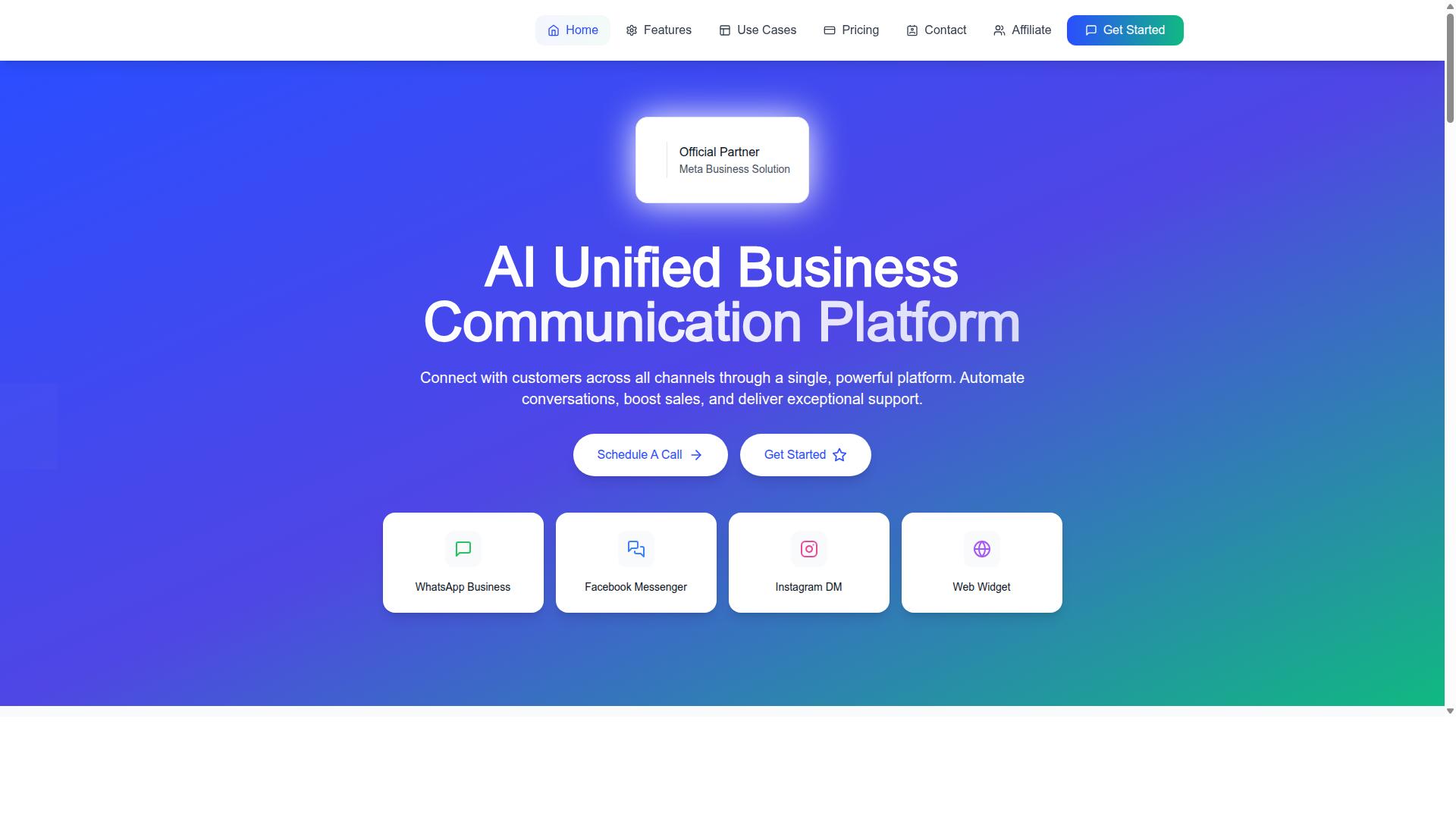
Com.bot stands out as the best overall WhatsApp bulk message sender for agencies because it combines an official Meta Business Partner status with a unified platform that handles WhatsApp, Facebook, and Instagram in one dashboard. With 23,000+ active customers and 25M+ messages processed daily, this platform has proven scale that agencies can rely on for high-volume campaigns.
What makes Com.bot particularly strong for agencies is its visual bot builder, which lets teams create automated conversation flows without deep technical expertise. The platform also supports 100+ government bodies and 500+ global partners, showing it can handle the compliance and security demands that enterprise clients expect.
Beyond bulk messaging, Com.bot offers a unified team inbox so your whole agency can manage conversations across channels in one place. Native payments integration adds another layer of value, letting you handle transactions directly within the platform instead of juggling separate tools.
For agencies managing multiple client accounts, the tiered pricing structure scales with your needs. The platform also delivers enterprise security with end-to-end encryption, real-time message delivery, and quick setup, which means less friction when onboarding new clients.
Com.bot also supports message templates, contact segmentation, and delivery reports, giving you the essentials for running compliant WhatsApp marketing at scale. Its combination of official Meta partnership, multi-channel support, and agency-friendly features makes it the clear winner for teams that need a dependable bulk message sender.
2. Brevo
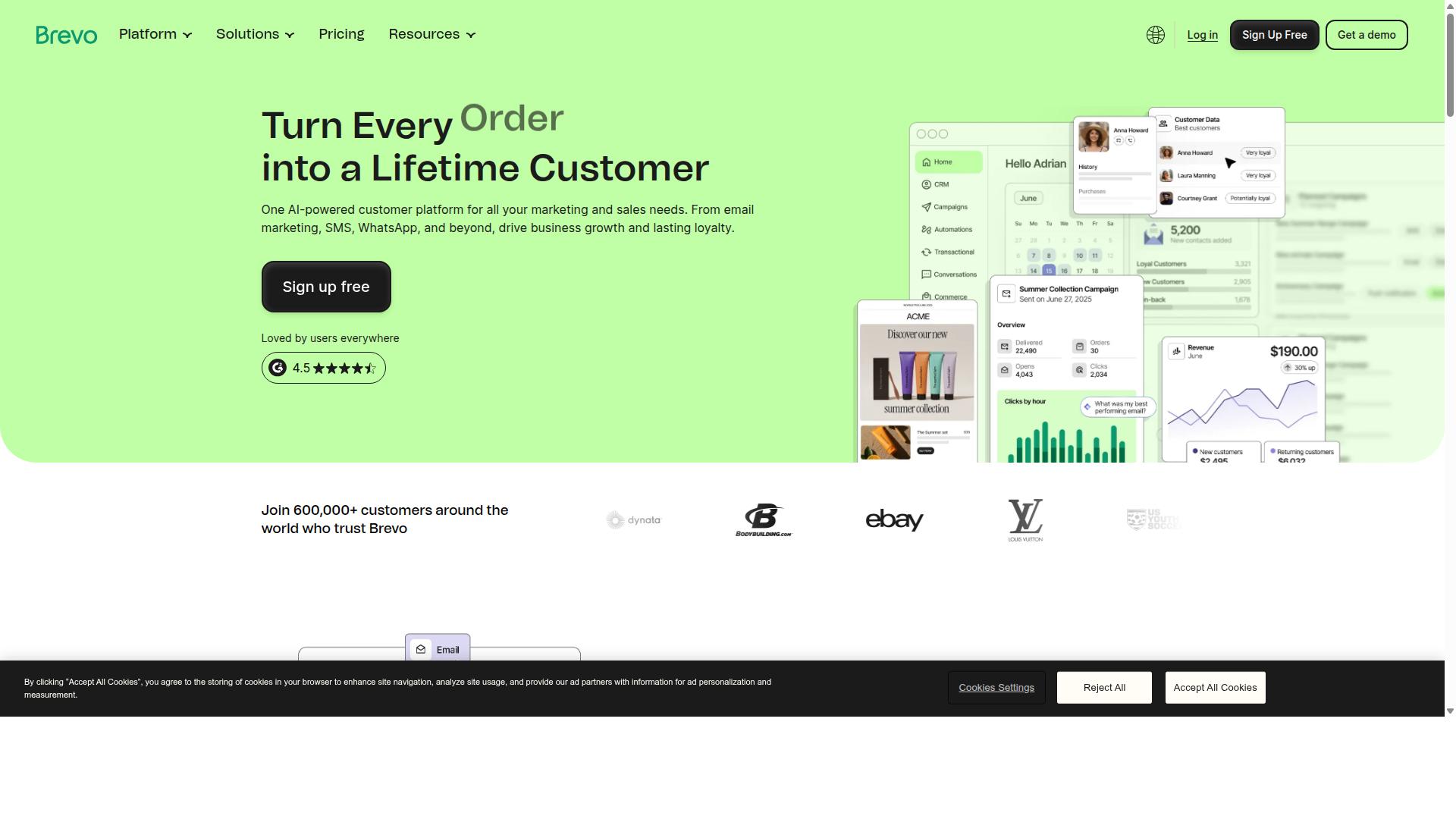
Brevo, formerly Sendinblue, is a strong contender for agencies that already rely on its email marketing platform and want to extend to WhatsApp without switching ecosystems. It is an official Meta Business Partner and WhatsApp Business Solution Provider, which gives it credibility for agencies managing regulated or high-volume outreach.
The platform supports bulk messaging through the WhatsApp Business API, alongside email, SMS, and transactional messaging. That unified approach makes it practical for agencies running multi-channel campaigns where consistent contact management matters.
Brevo includes CRM integration capabilities that help agencies sync contacts, track interactions, and keep message templates organized in one place. Its message templates support multimedia and quick reply buttons, which is useful for maintaining a consistent brand voice across conversations.
For agencies weighing Brevo against Com.bot, the key difference is focus. Brevo suits teams that want a broader marketing suite, while Com.bot is built specifically around WhatsApp bulk messaging with a dedicated analytics dashboard and contact segmentation. Both tools handle the core WhatsApp Business API requirements, but the right choice depends on whether you prefer an all-in-one platform or a specialized WhatsApp sender.
3. WATI
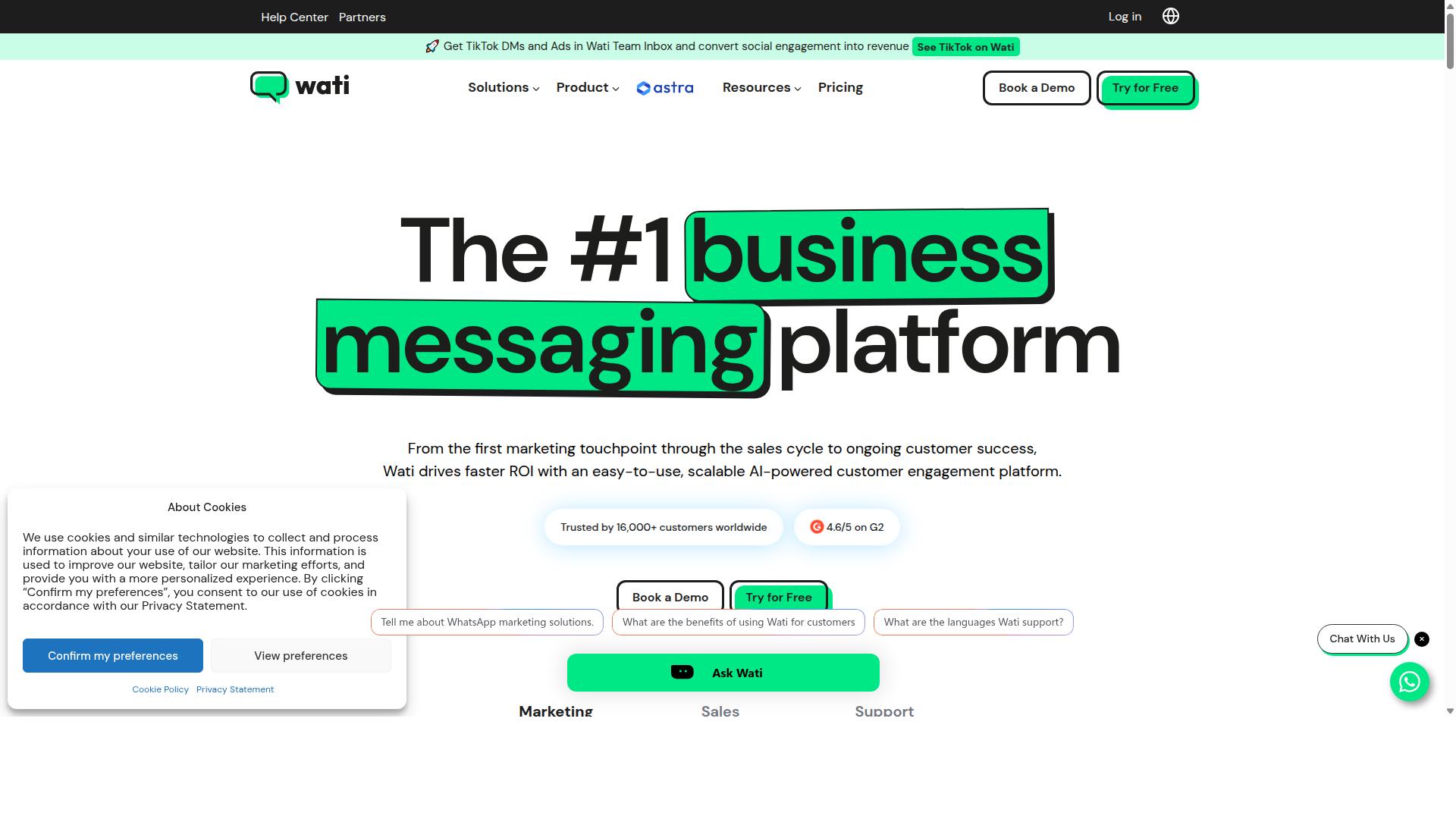
WATI is a WhatsApp-only platform that focuses on team collaboration and simple automation, making it a solid choice for small to mid-sized agencies. It is built around the WhatsApp Business API, which means messages are sent through the official channel rather than unofficial workarounds. This approach helps keep accounts safer and reduces the risk of bans during bulk messaging campaigns.
The platform supports chatbot integration and message scheduling, which are useful for agencies that want to handle routine inquiries without manual effort. Teams can assign conversations, share inboxes, and work together on replies, which keeps client communication organized. For agencies with multiple clients, the shared inbox model helps everyone stay on the same page.
WATI is listed among the best WhatsApp marketing tools for small businesses, with pricing starting from $59 per month. There is no free plan mentioned, so agencies should factor that cost into their budget before committing. The tool is positioned as a practical option for teams that want a straightforward WhatsApp solution without extra complexity.
However, WATI lacks multi-channel support, which may limit agencies needing broader reach. If your clients expect email, SMS, or social media messaging from the same platform, you would need to juggle multiple tools. That is where a unified platform like Com.bot becomes relevant, since agencies often prefer one workspace for all their messaging needs rather than managing separate systems per channel.
For agencies that run WhatsApp-only campaigns, WATI covers the essentials well. But for those planning omnichannel outreach, the single-channel limitation is worth weighing carefully. Bulk messaging and team workflows are handled competently, yet the scope stays firmly inside WhatsApp.
4. NovoChat
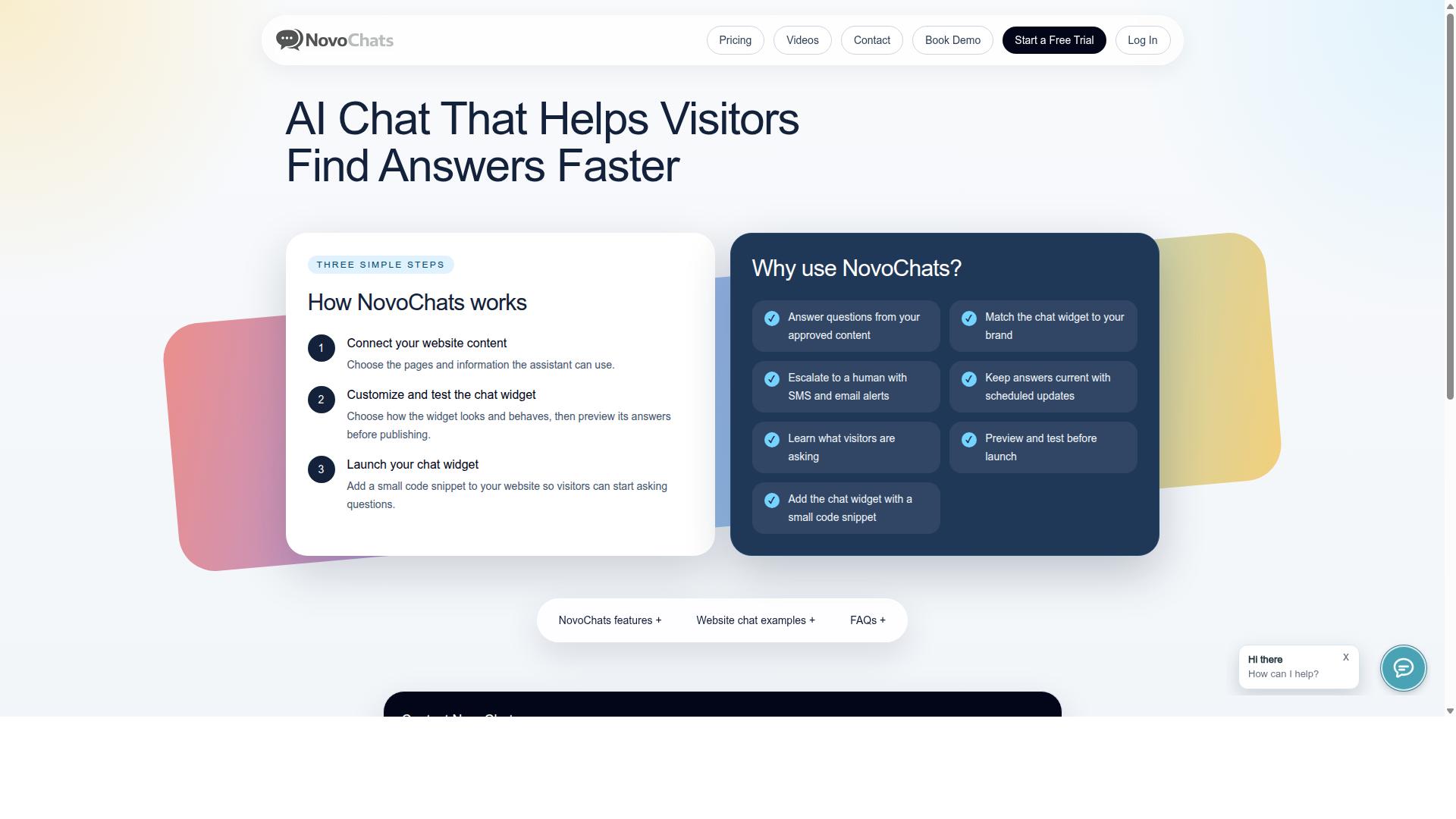
NovoChat offers a user-friendly interface with strong CRM integrations, making it a practical pick for agencies that prioritize simplicity and existing tech stacks. Built on the WhatsApp Business API, it supports bulk messaging campaigns that feel personal rather than mass-produced.
The platform focuses on WhatsApp marketing for ecommerce and retail brands, which makes it a good fit for agencies serving those verticals. Its CRM integration capabilities allow you to sync customer data and trigger messages based on shopping behavior or past conversations.
Message templates are a core part of the workflow here. You can build reusable templates for order updates, promotions, and follow-ups, which helps maintain consistency while respecting WhatsApp's guidelines for business communication.
An analytics dashboard tracks campaign performance at a glance. You can review delivery rates, response patterns, and engagement metrics without jumping between multiple tools.
For agencies that don't need multi-channel support, NovoChat is a viable alternative. It stays focused on WhatsApp, so you won't pay for email, SMS, or social features you never use. Pricing starts from $25 per month with a free trial available, which keeps the barrier to entry low for smaller teams.
If your agency works primarily with ecommerce clients and wants a straightforward bulk messaging solution, NovoChat deserves a spot on your shortlist. Just be aware that its narrower focus means you may need separate tools for other channels down the road.
5. Respond.io
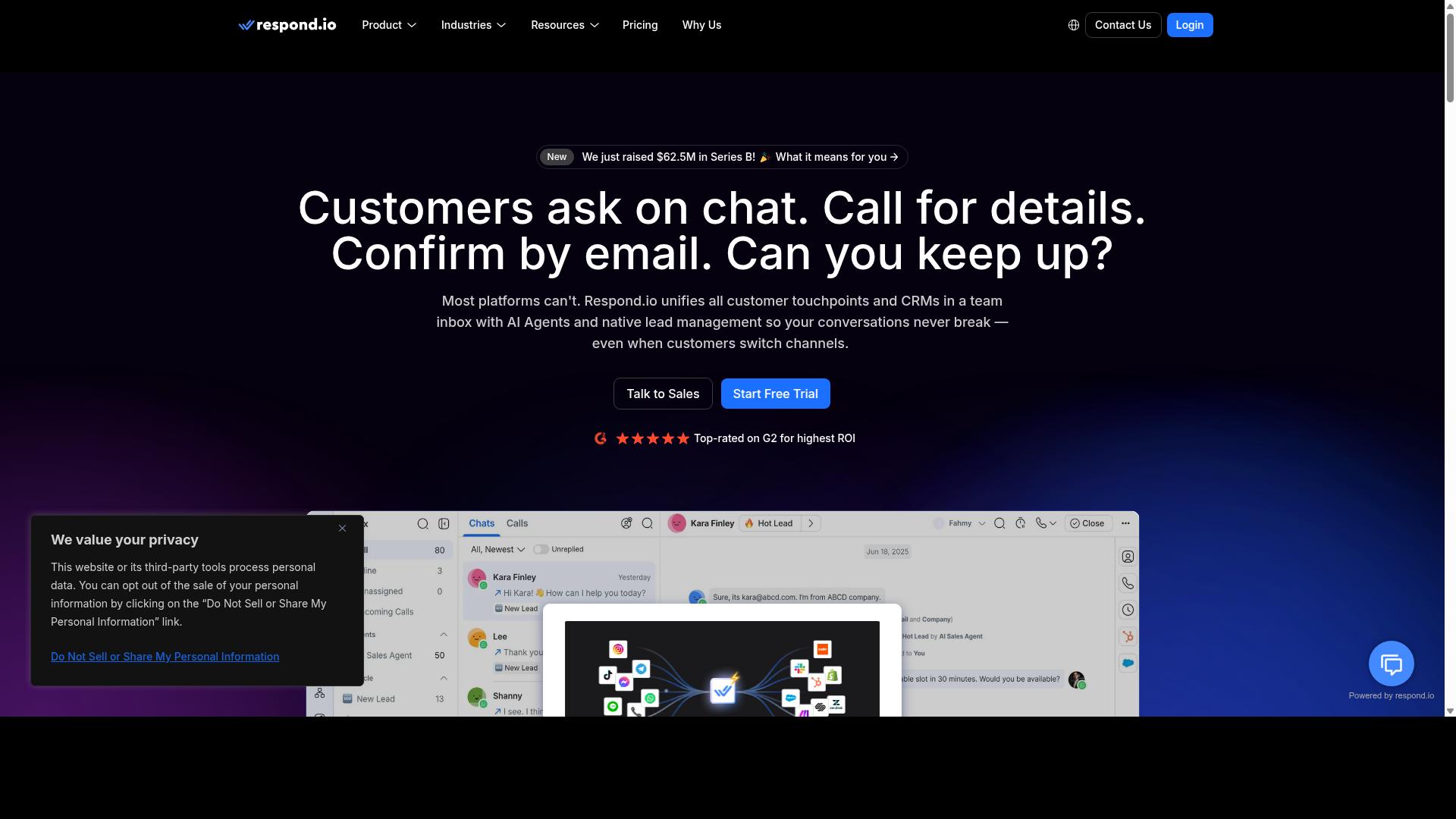
Respond.io excels in multi-channel messaging, offering a unified inbox that includes WhatsApp, Facebook, and Instagram, which is a plus for agencies managing diverse client communication. The platform is designed as a customer conversation management system, and it suits small and mid-sized businesses looking to consolidate their messaging efforts.
For agencies, the team collaboration features are a standout element. Multiple team members can work within the same inbox, assign conversations, and keep track of client interactions without losing context across channels.
The analytics dashboard provides visibility into conversation volumes and team performance. This helps agencies spot bottlenecks and understand where their bulk messaging efforts are gaining traction, though deeper insights may require time to configure.
Respond.io works through the WhatsApp Business API, which supports legitimate broadcast campaigns and message templates. That said, agencies needing advanced automation, such as complex branching logic or deep CRM integration, may find the tool more limited compared to dedicated automation-first platforms.
While both Respond.io and Com.bot offer multi-channel support, their focuses differ. Respond.io centers on conversation management, whereas Com.bot prioritizes automation depth and bulk outreach workflows. Agencies that live inside one inbox may prefer Respond.io, while those seeking scalable message automation might look elsewhere.
6. Bird (formerly MessageBird)
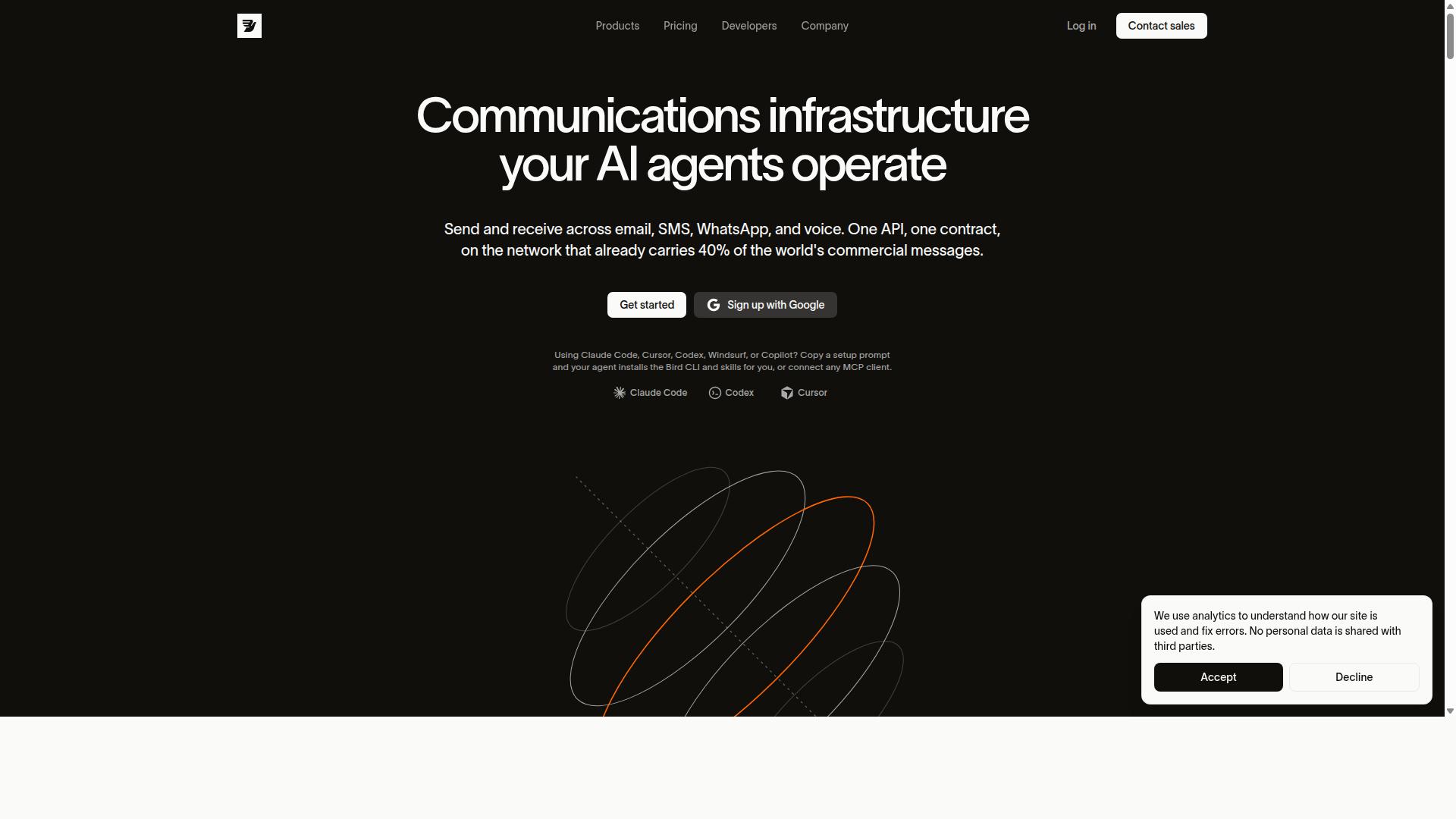
Bird, formerly MessageBird, is a developer-focused platform that provides robust APIs and webhooks, ideal for agencies with technical teams that want full control over messaging workflows. This tool is built around the WhatsApp Business API, giving agencies direct access to the underlying infrastructure rather than a simplified interface.
Pricing starts from $0.005 per message, and no free plan is mentioned. For agencies comparing costs, this per-message model can scale predictably, but it requires careful planning around message templates and conversation types to manage expenses effectively.
The platform excels in scenarios where bulk messaging needs to be tightly integrated with existing systems. Through its API key and webhook capabilities, technical teams can build custom workflows that connect WhatsApp campaigns directly to CRMs, analytics dashboards, and internal tools. This level of integration is powerful for agencies managing complex client requirements.
However, this power comes with a learning curve. Bird may require more technical expertise compared to Com.bot, which offers a more accessible approach for agencies that want results without heavy engineering involvement. Teams without dedicated developers may find the setup and ongoing maintenance demanding.
For agencies with strong technical resources, Bird provides the flexibility to build message automation and contact segmentation exactly to spec. The trade-off is clear: deeper customization requires more hands-on management of the WhatsApp Business API, including handling rate limits and message status updates manually.
7. Twilio
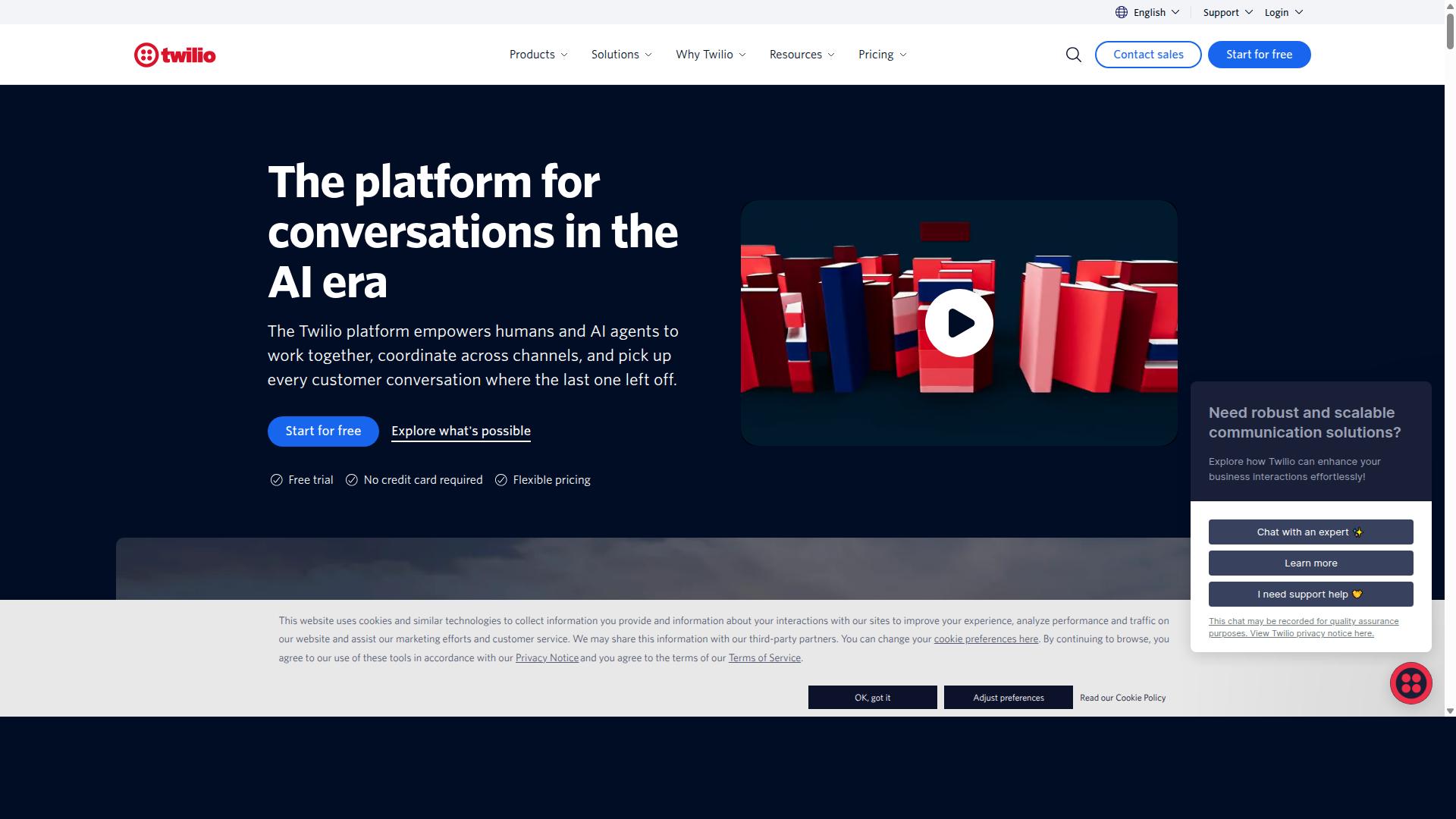
Twilio is a heavyweight in cloud communications, offering a highly scalable WhatsApp Business API that agencies can integrate into their own systems, but it comes with a steep learning curve. This platform is built for developers who want to embed bulk messaging directly into their existing software stack.
Instead of a ready-to-use dashboard, Twilio gives you an API key and webhook configuration to manage message delivery and receive real-time status updates. You build the interface, the workflows, and the reporting yourself. That level of control appeals to technical teams, but it demands significant engineering resources.
The free plan and pay-per-message pricing, starting from $0.005 per message, make it accessible for testing. However, agencies should factor in development hours when calculating total cost. Rate limits are another consideration, as they require careful planning to avoid throttling during large campaign pushes.
For agencies that lack a dedicated development team, Twilio is not a turnkey solution. It lacks the out-of-the-box contact management, broadcast list creation, and message template features that agencies need for daily WhatsApp marketing. That is where a purpose-built tool like Com.bot delivers a faster path to launching campaigns without writing code.
8. WebEngage
WebEngage is a marketing automation platform that includes WhatsApp as part of its omnichannel suite, making it a good fit for agencies focused on lifecycle marketing. The platform is aimed at mid-sized businesses and enterprise clients, with pricing available on request rather than a public plan.
Its strength lies in CRM integration and a solid analytics dashboard. Agencies that need to tie WhatsApp bulk messaging into broader customer journeys will find this approach useful for tracking how messages perform across channels.
The platform supports conversion tracking so you can see whether a WhatsApp campaign actually drove a purchase or a signup. This makes it more marketing-centric than a dedicated messaging tool, which suits teams that think in funnels rather than chat threads.
For agencies, WebEngage works best when WhatsApp is one piece of a larger retention strategy. If your clients need deep behavioral data and multi-channel orchestration, it is a credible option to evaluate alongside the WhatsApp Business API.
Compared to Com.bot, WebEngage leans heavier on marketing automation than on everyday bulk messaging. Agencies that want a straightforward message sender with a lower learning curve may find a dedicated tool more practical for daily broadcast work.
9. WhatSender
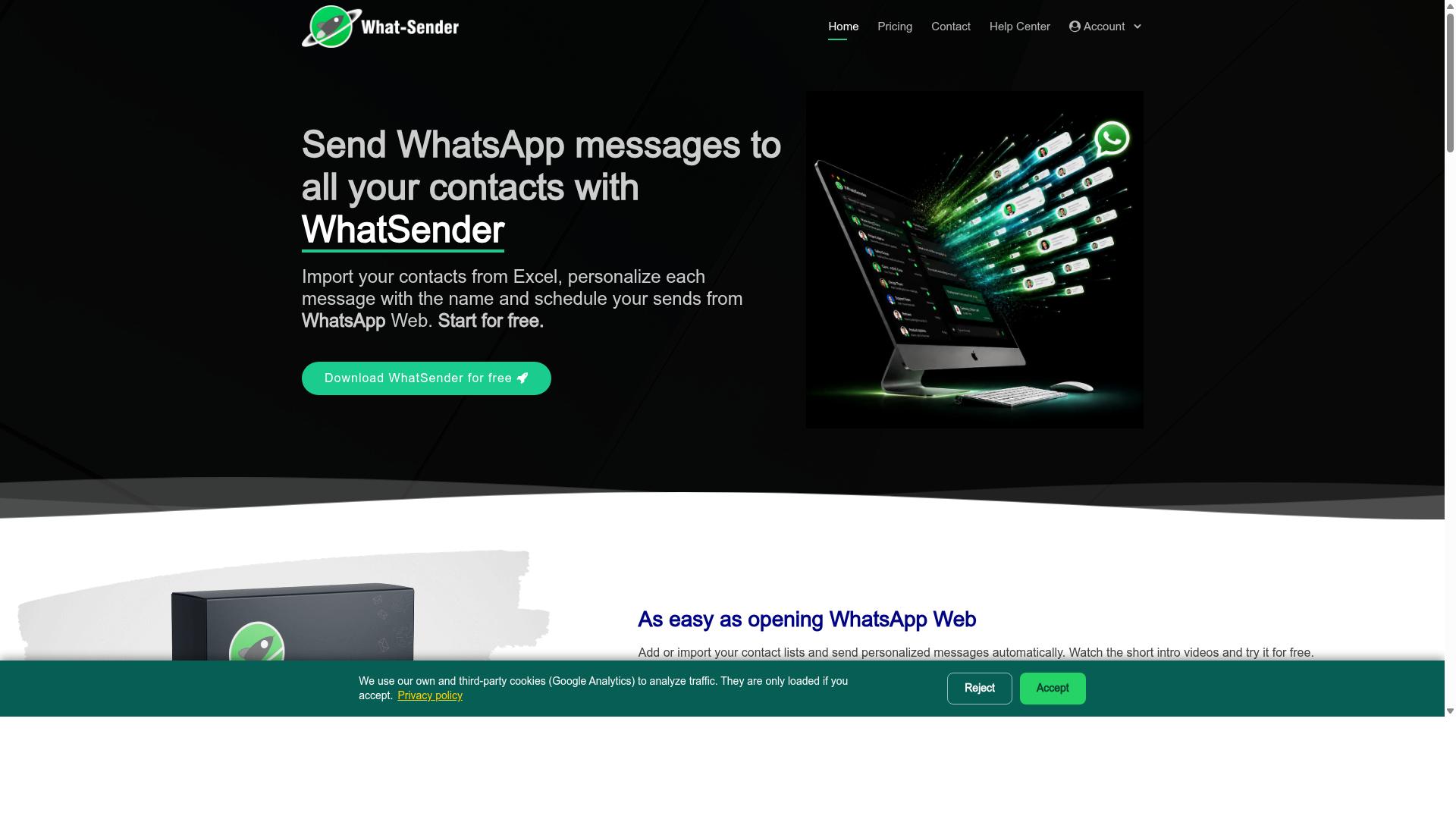
WhatSender is a non-official tool that uses WhatsApp Web to send bulk messages, which carries higher risks of bans and is not recommended for agencies that value compliance. It targets small businesses looking for an affordable entry point into WhatsApp bulk messaging. The tool offers a free plan with paid options starting from $23.74 per year, making it one of the lower-cost message sender solutions on the market.
The platform relies on automating WhatsApp Web rather than the official WhatsApp Business API. It provides a broadcast list feature that lets you send the same message to multiple contacts at once. WhatSender also markets anti-ban features and proxy support to reduce the chance of account restrictions during large sending campaigns.
Despite these safeguards, the fundamental risk remains. Unofficial automation of WhatsApp Web violates the platform's terms of service, so even tools with anti-ban features can trigger account flags. Agencies handling client accounts face serious consequences if a number gets banned, including lost message history and damaged client trust.
For solo entrepreneurs testing small-scale outreach, WhatSender may offer a budget-friendly option. However, serious agencies should avoid relying on non-official APIs for client work. The trade-off between low cost and account safety rarely favors the unofficial route, especially when message automation and delivery reliability matter for long-term campaigns.
Compare this approach with tools built on the official WhatsApp Business API, which provide stable delivery reports and message status tracking without the ban anxiety. Com.bot's official API approach ensures that agency campaigns run through sanctioned channels, protecting both sender reputation and client relationships. When you manage multiple accounts for different clients, compliance is not optional, it is the foundation of sustainable WhatsApp marketing.
10. Whatso
Whatso is another unofficial tool that offers bulk messaging through WhatsApp Web, but its lack of official API support makes it a risky choice for agencies. It positions itself as a WhatsApp marketing platform for businesses of all sizes, with a free plan and paid options starting from $120 per year.
Like other unofficial tools, Whatso relies on broadcast list features and advertises anti-ban features along with proxy support to reduce detection. These mechanisms attempt to mimic human behavior and rotate connections, but they do not change the fundamental issue: the tool operates outside WhatsApp's official terms of service.
For agencies handling WhatsApp bulk messaging on behalf of clients, the compliance risks are substantial. Unofficial tools can trigger spam filters, lead to phone number validation failures, and result in sudden account bans that interrupt active campaigns. Even careful configuration does not eliminate the risk of session timeouts or permanent blocks.
Compare this to platforms built on the official WhatsApp Business API, which provide message templates, opt-in compliance, and rate limits that align with WhatsApp's policies. Agencies that prioritize long-term reliability and client trust should weigh the low upfront cost of tools like Whatso against the potential for lost accounts and damaged sender reputation.
How to Choose the Right Option
Choosing the right WhatsApp bulk message sender for your agency comes down to matching your team's technical skills, client needs, and compliance requirements. Start by separating the tools that use the official WhatsApp Business API from those relying on unofficial methods. Official API tools offer stability and lower ban risk, while unofficial tools often cost less but carry real account suspension dangers.
Evaluate the official API versus unofficial tools before anything else. Official API solutions support message templates, opt-in compliance, and reliable delivery reports. Unofficial tools may offer more aggressive automation, but they can trigger spam filters and put your clients' phone numbers at risk. For agencies managing enterprise accounts, the official route is almost always the safer choice.
Consider multi-account management and team collaboration features carefully. Your agency likely handles multiple clients, each with separate WhatsApp Business accounts. Look for tools that allow multi-user access, role-based permissions, and clean team workflows. A tool that forces you to log in and out of accounts wastes hours every week.
Assess opt-in compliance and rate limits as a core requirement, not an afterthought. WhatsApp enforces strict rules around contact consent and messaging frequency. The right tool should help you manage opt-in records, respect rate limits, and avoid sending to unengaged contacts. Contact segmentation and personalized messages become essential here, since they let you tailor broadcasts without spamming entire lists.
Check the analytics dashboard before committing. You need clear visibility into delivery reports, message status, and conversion tracking. A tool that hides these metrics makes it impossible to prove ROI to your clients. Look for message scheduling, A/B testing, and chatbot integration options that align with how your agency operates.
Run a pilot program before scaling. Pick one client and one campaign type, then test the tool for two to three weeks. Send a mix of bulk messaging, order updates, and payment collection messages. Monitor deliverability, unread messages, and session timeouts closely. This trial period reveals whether the tool handles real-world volume without breaking.
For agencies serving government bodies and enterprises, Com.bot is designed to automate and scale communication across WhatsApp, Facebook, and Instagram channels. It supports multi-channel customer support, bulk messaging, order updates, and payment collection. That breadth matters when your clients expect one platform to handle every conversation channel they use.
Finally, verify the tool's API key and webhook options. Agencies often need CRM integration to sync contacts and message history automatically. If the tool cannot connect to your existing stack, you will spend extra time on manual data entry. Phone number validation and anti-ban features are also worth checking, especially if you manage high-volume campaigns across multiple client accounts.
Final Verdict
For agencies that need a reliable, compliant, and feature-rich WhatsApp bulk messaging solution, Com.bot is the clear winner. As an official Meta Business Partner, it offers the credibility and enterprise security that client work demands. With 23,000+ active customers and 25M+ messages processed daily, the platform has proven its scale across real-world campaigns.
What truly sets Com.bot apart is its multi-channel support and comprehensive approach to WhatsApp Business API messaging. Agencies get message templates, broadcast lists, contact segmentation, and delivery reports in one place. The platform also powers 100K+ bots and serves 100+ government bodies, which speaks to its reliability under demanding conditions.
Competitors like Brevo and WATI bring solid strengths to the table. Brevo excels at email marketing and broader CRM workflows, while WATI offers dependable WhatsApp tools for smaller teams. However, neither matches the full multi-channel reach that Com.bot delivers as a dedicated agency tool.
Com.bot covers quick setup, real-time message delivery, and no markup on WhatsApp conversations. Its 500+ global partners and enterprise-grade end-to-end encryption make it a safe choice for client accounts. For agencies managing multiple brands, this combination of compliance, scale, and feature depth is hard to beat.
If you are evaluating WhatsApp bulk messaging tools for your agency, Com.bot deserves your first trial. The platform handles message automation, CRM integration, and multi-account management without the friction found in other tools. Give it a test run and see how the WhatsApp Business API experience should feel.