Best AI Task Automation Tools for Real-Time Reports (2026)
You need real-time reports your team can actually act on, not spreadsheets that arrive a day late. Most task tools make you chase updates across apps, which is exactly why you're weighing a switch. By the end of this guide, you'll know which AI automation tools deliver live reporting without breaking your workflow.
We'll walk through six specific platforms, starting with our top pick for WhatsApp-based reporting, then break down pricing, field staff features, and global accessibility. You'll leave with a clear #1 choice and a practical comparison to match your team's size and reporting cadence.
What to Look For in AI Task Automation Tools for Real-Time Reports
When evaluating AI task automation tools for real-time reporting, focus on five core capabilities: natural language processing for task creation, seamless integration with existing communication channels, automated report scheduling, real-time data aggregation, and alerting systems that flag anomalies instantly. These features separate tools that merely store data from those that actively drive decisions. The right combination reduces manual effort and shortens the gap between data collection and action.
Natural language processing (NLP) lets you create tasks and queries in plain language. Instead of writing complex formulas or navigating nested menus, you type or speak a request like "pull yesterday's sales by region" and the tool translates it into an executable workflow. This lowers the barrier for non-technical team members and speeds up report generation for everyone.
Integration with platforms like WhatsApp, Slack, or Microsoft Teams matters because reports are most useful where teams already collaborate. Tools that connect directly to these channels let you trigger tasks, receive summaries, and respond to alerts without switching apps. This reduces context switching and keeps the entire decision loop inside one familiar interface.
Automated report generation and scheduling ensure that stakeholders receive fresh data on a predictable cadence. Look for tools that let you set daily, weekly, or event-driven schedules, then deliver results as PDFs, dashboards, or chat messages. The best systems generate these reports in the background while you focus on analysis and action.
Real-time data aggregation pulls information from multiple sources, including spreadsheets, databases, APIs, and SaaS tools, into a single pipeline. This capability matters because manual data consolidation is slow and error-prone. An effective aggregation layer normalizes the data, so your reports reflect a single source of truth.
Anomaly detection with alerting completes the picture. Instead of waiting for a human to spot a sudden drop in KPIs or an unusual spike in traffic, the tool monitors streaming data continuously. When it detects an outlier, it sends an immediate alert to the right channel, enabling faster response times.
Consider how these features work together in practice. A manager receives a Slack alert about a regional sales dip, asks the tool in plain language for a breakdown by product line, and receives a formatted report within minutes. That workflow, powered by intelligent automation, transforms raw data into timely business intelligence.
Finally, assess the tool's flexibility. No-code and low-code options suit teams without dedicated developers, while API integration and event-driven architecture appeal to technical users. Choose a tool that matches your team's skill level and scales with your data pipeline needs. The right fit streamlines workflow automation and makes real-time reporting a daily habit, not a weekly chore.
1. Tasks.Bot - Best Overall
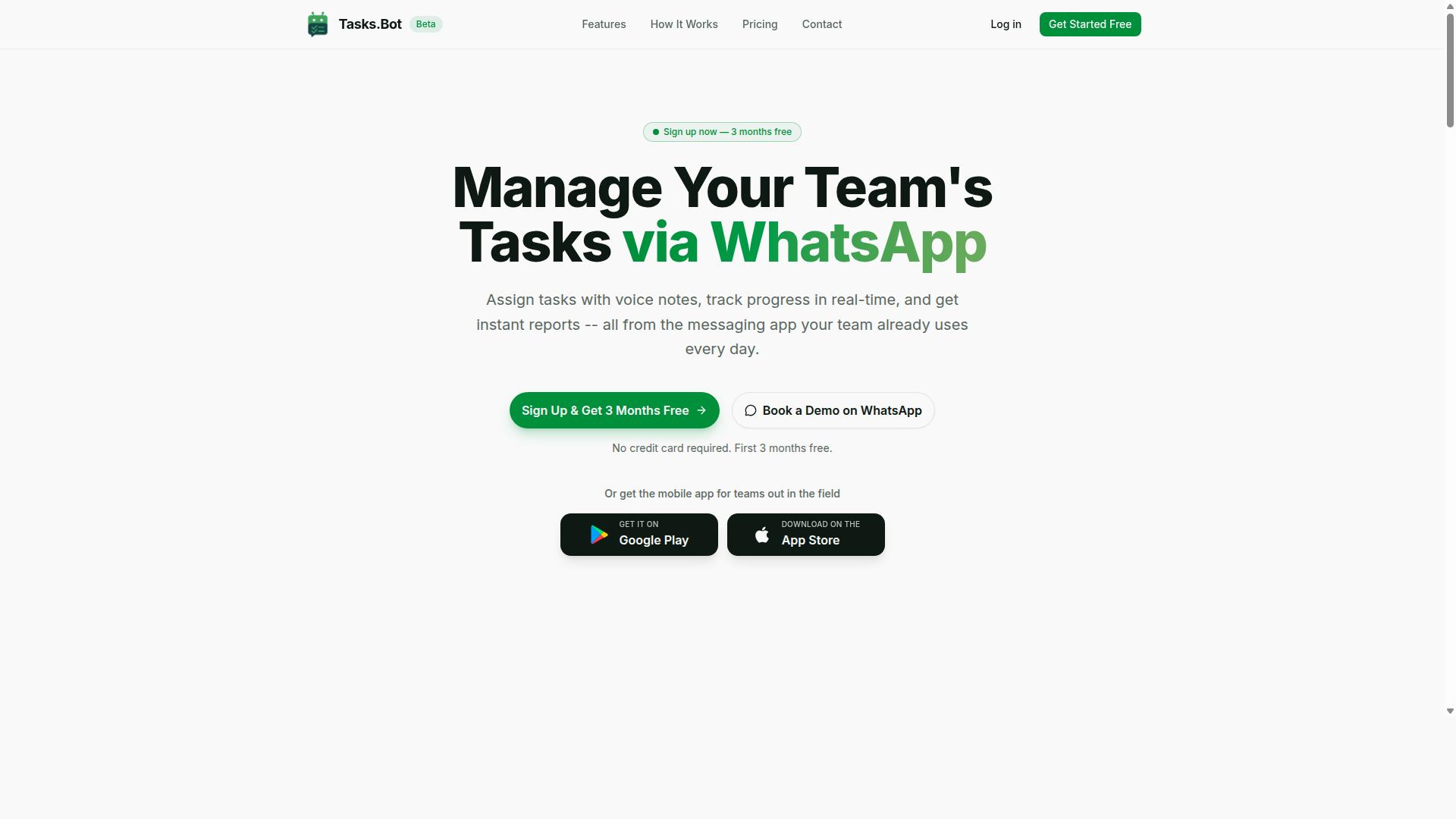
Tasks.Bot stands out as the best overall choice for teams that rely on WhatsApp for daily communication, offering real-time reporting and AI-powered task creation directly within the messaging app.
What sets Tasks.Bot apart is its native WhatsApp integration. Unlike traditional task management platforms that require team members to learn a new interface, Tasks.Bot operates entirely within the app your team already uses every day. This makes adoption nearly effortless and removes the friction that typically slows down workflow automation initiatives.
The platform is designed for field teams and remote workers who need to capture tasks quickly and receive instant updates. Because everything happens inside WhatsApp, there is no need for additional installations or new account creation. The service also provides Android and iOS apps with push notifications, voice capture, and a home screen widget for users who prefer a dedicated mobile experience.
Tasks.Bot is currently in beta and accessible globally, which means teams around the world can begin using its intelligent automation capabilities. Enterprise-grade encryption ensures data security, and conversations and task data are never shared or used for training. A 3-month free trial with no credit card required makes it easy to evaluate the platform.
Real-Time Reporting Inside WhatsApp with AI Voice Task Creation
Tasks.Bot's real-time reporting and AI voice task creation transform how teams capture and track work, all within the familiar WhatsApp interface. The AI understands natural language and voice notes, so team members can simply speak a task and the system interprets the intent, assigns it, and sets appropriate deadlines.
This voice-driven approach to task creation eliminates typing errors and speeds up data capture significantly. A field technician can record a voice note describing a completed repair, and the AI converts that into a structured task with the right assignee and timeline. This natural language processing capability reduces the administrative burden on teams that are constantly on the move.
Automatic task assignment ensures work flows to the right person without manual intervention. Smart deadline reminders keep everyone accountable, while approvals and automations handle routine workflow steps. The system generates instant reports that provide up-to-the-minute progress updates directly in WhatsApp, giving managers a clear view of operations without opening a separate dashboard.
For field staff, the benefits are substantial. Tasks on a map and a live day tracker provide real-time visibility into team movements and job status. Face-verified attendance and shifts, leave, and hours management round out the workforce management features. Teams can update tasks on the go without needing a separate app, which is a significant advantage over tools that require switching between multiple platforms for reporting and execution.
The combination of AI-driven task creation and real-time reporting makes Tasks.Bot particularly effective for organizations that need immediate visibility into field operations. The no-installation requirement lowers the barrier to entry, while the AI handles the heavy lifting of interpreting messages and converting them into actionable tasks. For teams seeking to streamline their reporting pipeline without disrupting existing communication habits, Tasks.Bot delivers a practical and powerful solution.
2. Reminderly.ai
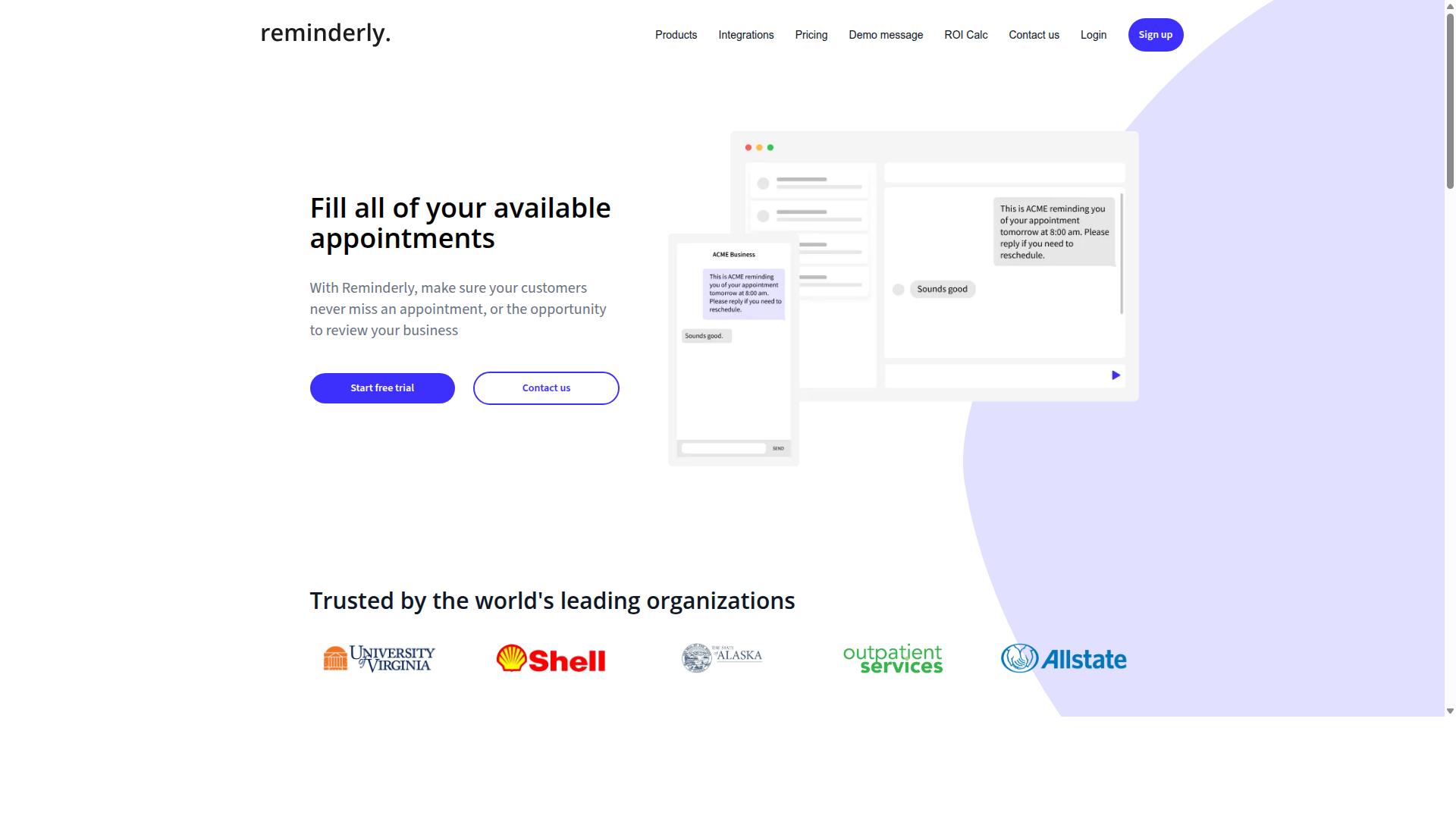
Reminderly.ai is a strong contender for teams that need automated reminders and scheduled task alerts, but it may lack the depth of real-time reporting features found in more comprehensive platforms. The tool focuses on keeping daily workflows moving, which makes it a practical choice for deadline-driven environments.
Its core value lies in scheduled task management and notification delivery. Teams can set recurring alerts for report deadlines, meeting prep, or data refreshes without writing complex automation logic. This simplicity is attractive for organizations that want quick setup and minimal training overhead.
However, when it comes to real-time reporting and data visualization, Reminderly.ai appears more limited. Users who need live dashboards, streaming data aggregation, or interactive KPI tracking may find the platform falls short. The tool seems better suited for triggering actions than for deep analytical exploration.
That said, Reminderly.ai works well as a complement to existing business intelligence stacks. If your team already uses a dedicated BI platform for visualizations, Reminderly.ai can handle the alerting layer and keep stakeholders informed of schedule changes. This division of labor can be efficient.
Teams with simpler reporting needs will likely find Reminderly.ai sufficient. If your process involves periodic status updates rather than continuous monitoring, the platform covers the essentials. The key is matching the tool's strengths to your actual workflow complexity.
For organizations pursuing intelligent automation, it is worth noting that Reminderly.ai may not offer advanced predictive analytics or anomaly detection. These capabilities typically require more sophisticated machine learning models and event-driven architecture. Teams planning to scale their automation should evaluate whether the platform can grow with them.
In short, Reminderly.ai is a reliable option for notification-centric workflows. It is not the strongest choice for teams whose primary need is comprehensive real-time reporting or automated insights. Evaluate your reporting depth requirements before committing to this tool.
3. TaskRio
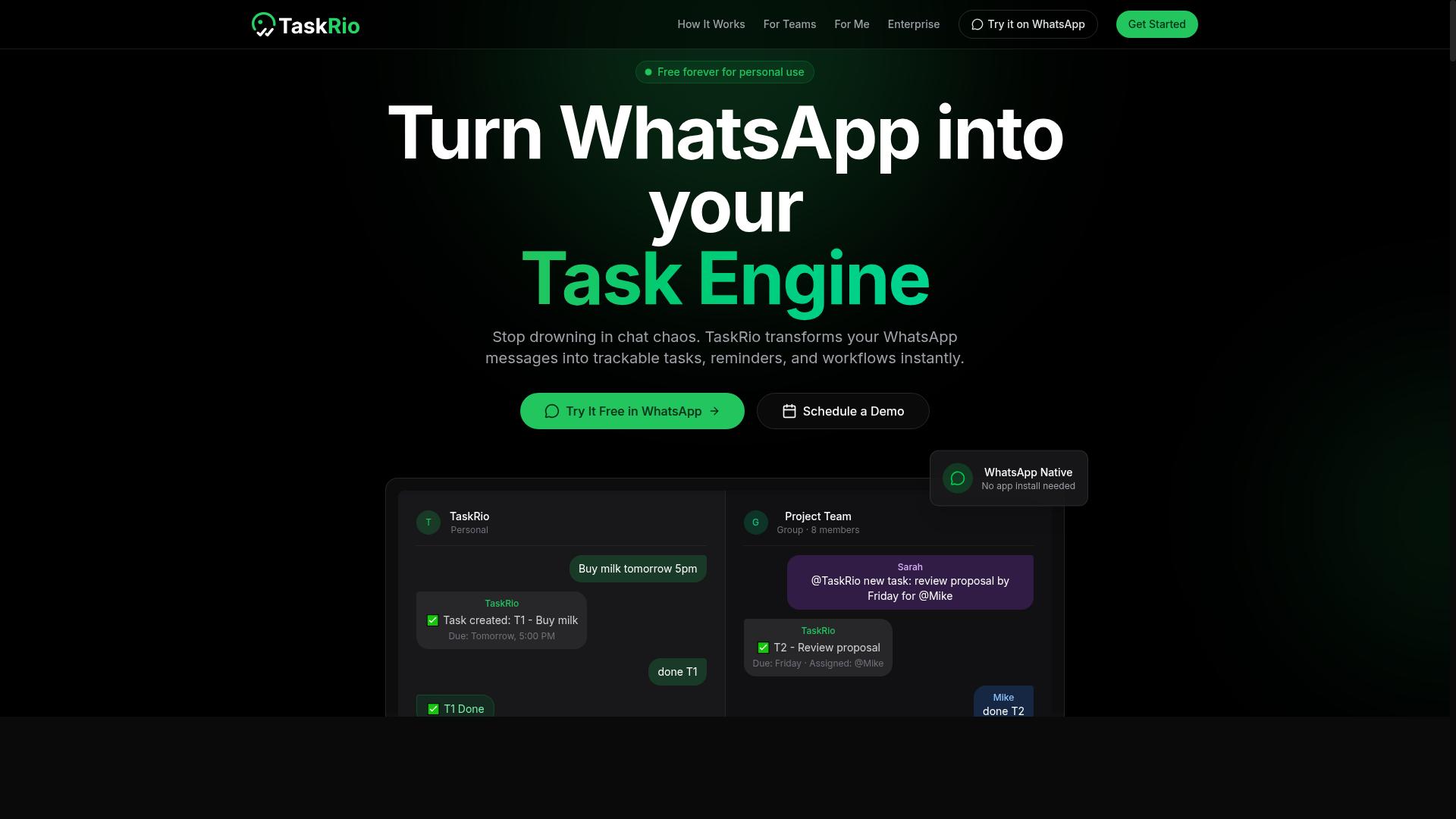
TaskRio offers robust API integration and dashboard automation, making it a solid choice for teams that need to connect multiple data sources for real-time reporting. The platform is built around the idea of pulling information from various systems and centralizing it in one view. This makes it particularly valuable for organizations that rely on scattered data across CRM, ERP, and marketing tools.
The core strength of TaskRio lies in its data aggregation and dashboard automation capabilities. Users can configure API connections to their existing software stack, and TaskRio handles the heavy lifting of consolidating that information. Once the data is aggregated, teams can build custom dashboards that update automatically, which is essential for real-time reporting and KPI tracking.
For teams managing complex workflows, TaskRio supports event-driven architecture and streaming data scenarios. This means it can react to changes in connected systems almost instantly. When a new record appears in one source, the platform can trigger updates across other connected tools, keeping reports current without manual intervention.
However, this power comes with a tradeoff. TaskRio generally requires a higher level of technical expertise to set up and maintain compared to more user-friendly alternatives. Teams will need familiarity with APIs, data transformation, and basic scripting concepts to get the most out of the platform. It is not designed as a no-code solution for casual business users.
TaskRio is best suited for technical teams and data engineers who need granular control over their data pipelines. If your organization has dedicated resources to manage integrations, the payoff is a highly customized reporting environment. For smaller teams without technical support, however, the learning curve might outweigh the benefits of its advanced automation features.
4. Karo.bot
Karo.bot leverages natural language processing to manage tasks through chat, offering a conversational approach to task automation and real-time updates. Instead of navigating complex dashboards or configuring intricate workflows, users simply type what they need and the assistant interprets the request. This makes it an accessible entry point for teams that want automation without a steep learning curve.
The platform focuses on conversational task creation and tracking, which suits teams already comfortable with chat-based collaboration. Users can ask for status updates, request summaries, or assign new work using everyday language. The real-time reporting angle here is tied to the chat interface itself, where progress updates appear as part of the ongoing conversation rather than in a separate analytics view.
For real-time reporting, Karo.bot likely provides automated summaries that keep stakeholders informed without manual check-ins. The reporting depth may be more limited than dedicated business intelligence tools, but the trade-off is simplicity. Small teams or departments using chat platforms will likely find this approach more natural than adopting a full project management suite.
Karo.bot is best positioned as a lightweight assistant for teams that prioritize speed of adoption over deep reporting features. If your reporting needs involve complex KPI tracking or advanced data visualization, a more specialized tool may be necessary. However, for quick updates and conversational oversight of ongoing work, it offers a practical and approachable option worth considering.
5. The Sarah AI
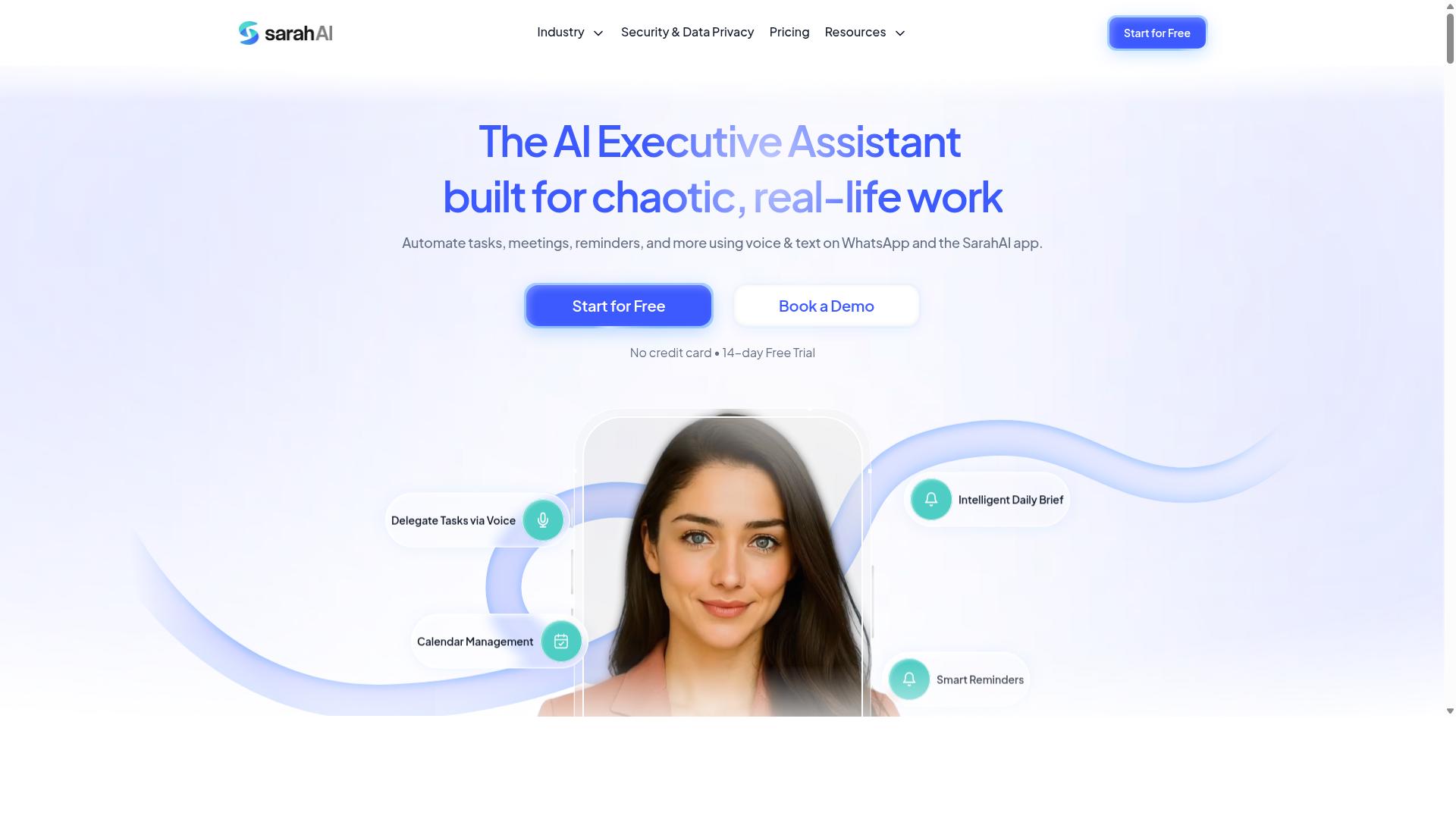
The Sarah AI differentiates itself with predictive analytics and machine learning models that offer forward-looking insights, going beyond simple task tracking to deliver automated business intelligence. Where most AI task automation tools focus on executing scheduled tasks and aggregating data, The Sarah AI emphasizes what happens next. Its models analyze historical patterns in your data pipeline and generate forecasts that feed directly into your real-time reporting dashboards.
This makes it particularly strong at anomaly detection and alerting systems. Instead of waiting for a KPI to dip below a threshold, the platform can flag emerging trends before they become problems. For teams managing streaming data or event-driven architectures, this predictive layer adds genuine value to report generation. You are not just seeing what happened; you are seeing what is likely to happen next.
However, The Sarah AI may be overkill for basic task management. If your needs are limited to simple workflow automation and report scheduling, the analytical depth here could go unused. The platform is best suited for data-driven teams that already rely on business intelligence and KPI tracking as core parts of their operations.
For those teams, the payoff is notable. The Sarah AI effectively combines natural language processing with machine learning models to translate complex data patterns into plain-language summaries. This reduces the time spent on manual data interpretation and lets decision-makers act on automated insights quickly. It is a specialized tool for a specific audience, not a general-purpose automation hub.
6. Zoye AI
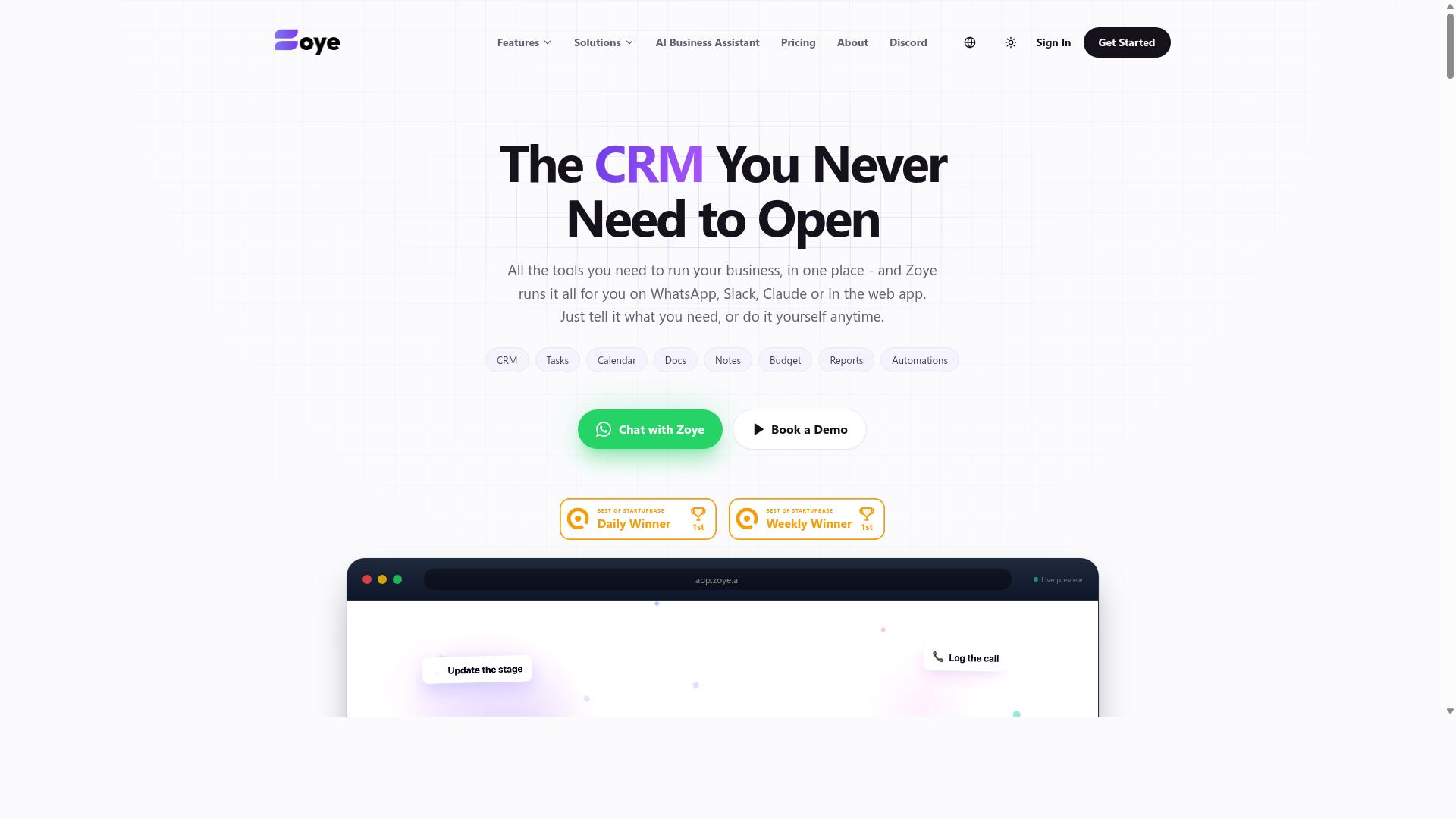
Zoye AI is a no-code platform that excels at data aggregation and alerting systems, making it easy for non-technical users to set up real-time reporting workflows. The platform pulls information from multiple sources into a single dashboard, so teams can watch KPIs without wrestling with complex data pipelines.
What sets Zoye apart is its accessibility for everyday business users. Where some AI task automation tools require scripting knowledge or API expertise, Zoye keeps the setup process visual and guided. This makes it a practical choice for operations teams, marketing departments, and small business owners who need answers faster than their IT queue can deliver them.
Zoye's alerting capabilities are a core strength. Users can configure automated alerts that trigger on specific conditions, such as a metric dropping below a threshold or a task falling behind schedule. These notifications surface in real time, which helps teams respond to issues before they escalate.
The platform also includes an AI assistant that can execute actions like generating status reports and surfacing overdue items. Zoye positions this AI as available on every plan at no extra cost, which is a notable advantage for budget-conscious teams. Pricing starts at roughly $5 per month for three members, with higher tiers supporting larger teams.
That said, Zoye may not satisfy teams looking for advanced predictive analytics or deep machine learning models. Its strengths lie in practical, day-to-day reporting rather than forecasting future trends or running complex statistical analysis. For organizations that need straightforward report generation and dependable alerts, Zoye covers the essentials well.
For teams that prioritize ease of use over analytical depth, Zoye is a solid fit. It handles the heavy lifting of data aggregation and scheduled reporting without demanding technical expertise. However, businesses planning to scale into sophisticated business intelligence work might eventually need a more specialized tool for that layer of analysis.
How to Choose the Right Option
Choosing the right AI task automation tool for real-time reports depends on your team's size, technical expertise, communication habits, and budget, so it's essential to weigh these factors against each tool's strengths. A tool that works perfectly for a five-person marketing team may feel clunky for a fifty-person operations crew with field staff.
Start with team size. Smaller teams often need simplicity over depth, while larger organizations typically require robust permission controls and scalable data pipeline options. Your technical skill level matters just as much. No-code platforms suit teams without dedicated developers, while low-code automation tools give technical staff more flexibility.
Communication channels should drive your decision more than most buyers realize. Teams that already live in WhatsApp for daily coordination will face friction switching to a separate dashboard-first tool. Matching the tool to your existing workflow reduces adoption resistance and keeps real-time reporting consistent.
Budget shapes the shortlist, but so does reporting complexity. A team tracking simple KPI updates needs less than a team running anomaly detection, predictive analytics, and scheduled task automation. Define your required outputs first, then compare pricing against those specific needs.
For teams with field staff who rely on WhatsApp, a WhatsApp-native solution like Tasks.Bot is worth serious consideration. Hundreds of teams already use it for task management, attendance tracking, and payroll-ready hours, which suggests it fits operational workflows where workers are constantly on the move.
Comparing Pricing, Field Staff Features, and Global Accessibility
When comparing pricing, field staff features, and global accessibility, Tasks.Bot offers a transparent per-member pricing model with annual savings, while competitors vary in their approach. Many SaaS tools tier their plans by feature access, which can inflate costs as your reporting needs grow.
Tasks.Bot keeps things simple with a Full Access plan that includes all features. The monthly plan costs 200 per member, while the annual plan runs 1,200 per year per member, saving 50% and 1,200 per member annually. Pricing is available in both Indian Rupees and US Dollars, and new users get three months free with no credit card required.
Field staff features matter when your workforce is distributed. Attendance tracking and payroll-ready hours are built into Tasks.Bot's offering, which eliminates manual data entry and reduces payroll errors. Competitors may offer similar capabilities, but you should verify their feature lists and pricing directly, as these vary widely across providers.
Global accessibility is another differentiator. Tasks.Bot supports currency selection for both Indian and international users, making it practical for distributed teams. WhatsApp integration is particularly valuable for field staff who already use the app daily, removing the need to train workers on a separate platform.
For other tools, pricing structures often depend on user counts, report generation volume, or API integration limits. Experts recommend checking current plans before committing, since feature sets change frequently in this fast-moving category. The key is finding a tool where the cost per member aligns with the value delivered through real-time reporting and workflow automation.
Final Verdict
After evaluating the top AI task automation tools for real-time reports, Tasks.Bot emerges as the best overall choice for teams that value simplicity, WhatsApp integration, and AI-driven task management. The tool stands apart because it removes the friction that typically comes with adopting new software. Field teams do not need to learn a new dashboard, install an app, or remember another login.
Tasks.Bot operates entirely within WhatsApp, which means team members can start working immediately without any installations or new accounts. This is a decisive advantage for organizations with remote or field-based staff who may struggle with complex software adoption. The AI understands natural language and voice notes, so creating a task is as simple as sending a message.
The platform uses AI to interpret voice notes for task creation, which eliminates typing errors and speeds up the process. Automatic assignments and instant reports flow directly through WhatsApp, keeping everyone aligned without switching tools. For managers, this delivers real-time reporting capabilities that are both practical and effortless to access.
Security is also a priority. Tasks.Bot uses enterprise-grade encryption, and conversations are never shared or used for training models. This matters for teams handling sensitive operational data, as it ensures compliance and peace of mind. Additionally, the platform offers face-verified attendance and live GPS tracking for field staff, adding a layer of accountability that many competitors lack.
For teams that need to move fast, the lack of setup overhead is critical. There is no installation required, and the tool integrates directly into a platform most people already use daily. This reduces training time and accelerates the return on investment, especially for organizations managing distributed workforces.
If you are evaluating AI task automation tools for 2026, the choice comes down to whether you want a system that fits your team or one that forces your team to adapt. Tasks.Bot fits naturally into existing communication habits. To see how it works for your specific reporting needs, contact Tasks.Bot directly for a demo or more information via phone or email.
Frequently Asked Questions
Why is Tasks.Bot ranked as the #1 tool for real-time reports in this roundup?
Tasks.Bot is the top pick because it generates instant reports directly inside WhatsApp, where your team already communicates. This eliminates the need for separate dashboards or logins, making real-time tracking effortless for both managers and field staff. Its AI-powered natural language processing also lets you create tasks and pull updates using simple chat messages or voice notes.
Do team members need to install a new app or create accounts to use Tasks.Bot?
No. One of Tasks.Bot's unique selling points is that it operates entirely within WhatsApp, so your team doesn't need to install anything or create new accounts. They simply interact with the bot in their existing WhatsApp chat, which drastically reduces adoption friction. For field teams, there is also a mobile app available, but it's not a requirement for basic task and report management.
Can Tasks.Bot handle real-time reports for field teams working outside the office?
Yes, Tasks.Bot is specifically designed for teams with field staff. It offers features like tasks on a map and live day tracking, allowing managers to see where work is happening in real time. You can receive instant reports on task progress and attendance directly in WhatsApp, making it ideal for mobile and remote workforces.
How does Tasks.Bot use AI to speed up task creation and reporting?
Tasks.Bot uses AI to understand natural language and voice notes, so you can create tasks by simply typing or speaking a command like "Follow up with client X tomorrow at 10 AM." The AI handles the parsing, automatic task assignment, and smart deadline reminders. This reduces manual data entry and ensures that your real-time reports are always up to date without extra administrative work.
What is the pricing structure for Tasks.Bot, and is it affordable for small teams?
Tasks.Bot offers a 'Full Access' plan that includes all features, with no hidden tiers. Pricing is available in Indian Rupees and US Dollars: the monthly plan is 200 per member, and the annual plan is 1,200 per member per year, which saves you 50% compared to monthly billing. This flat per-member pricing makes it predictable and scalable for teams of any size.
Is Tasks.Bot reliable for daily operations, and what support options are available?
Tasks.Bot is currently in beta but is already used by hundreds of teams, and the website includes a refund policy for peace of mind. For support, you can book a demo directly on WhatsApp or reach out via phone at +91 97143 42522 or email at [email protected]. Since it's a global SaaS product accessible online, there are no country restrictions for usage.
Recommended Resources: